
GREG CARIDEO
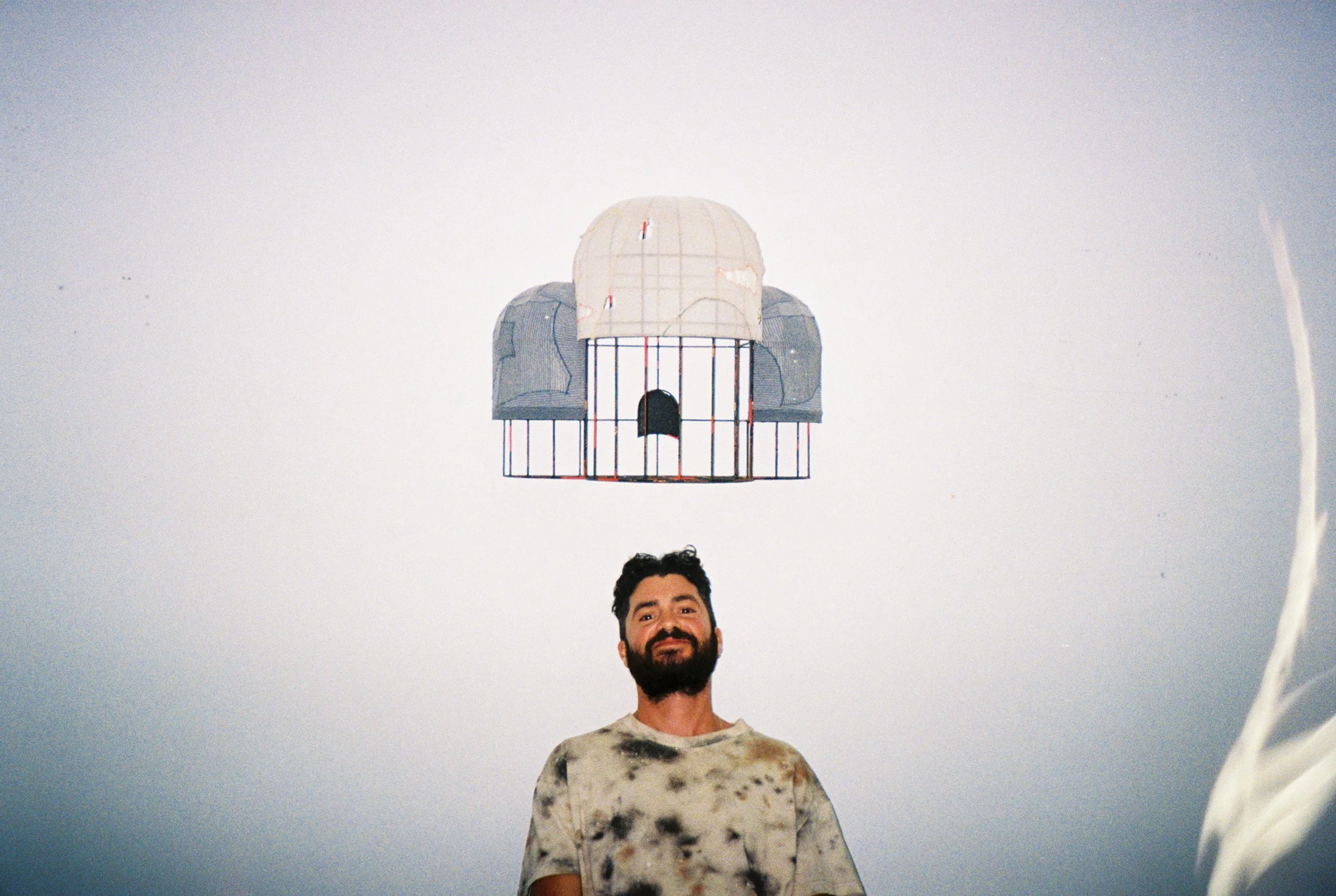
ZEBRA PRINT: Can you tell us about your relationship with architecture and the silhouettes that are present in each form?
CARIDEO: All architectural elements of my work begin with observation, starting with my immediate environment.
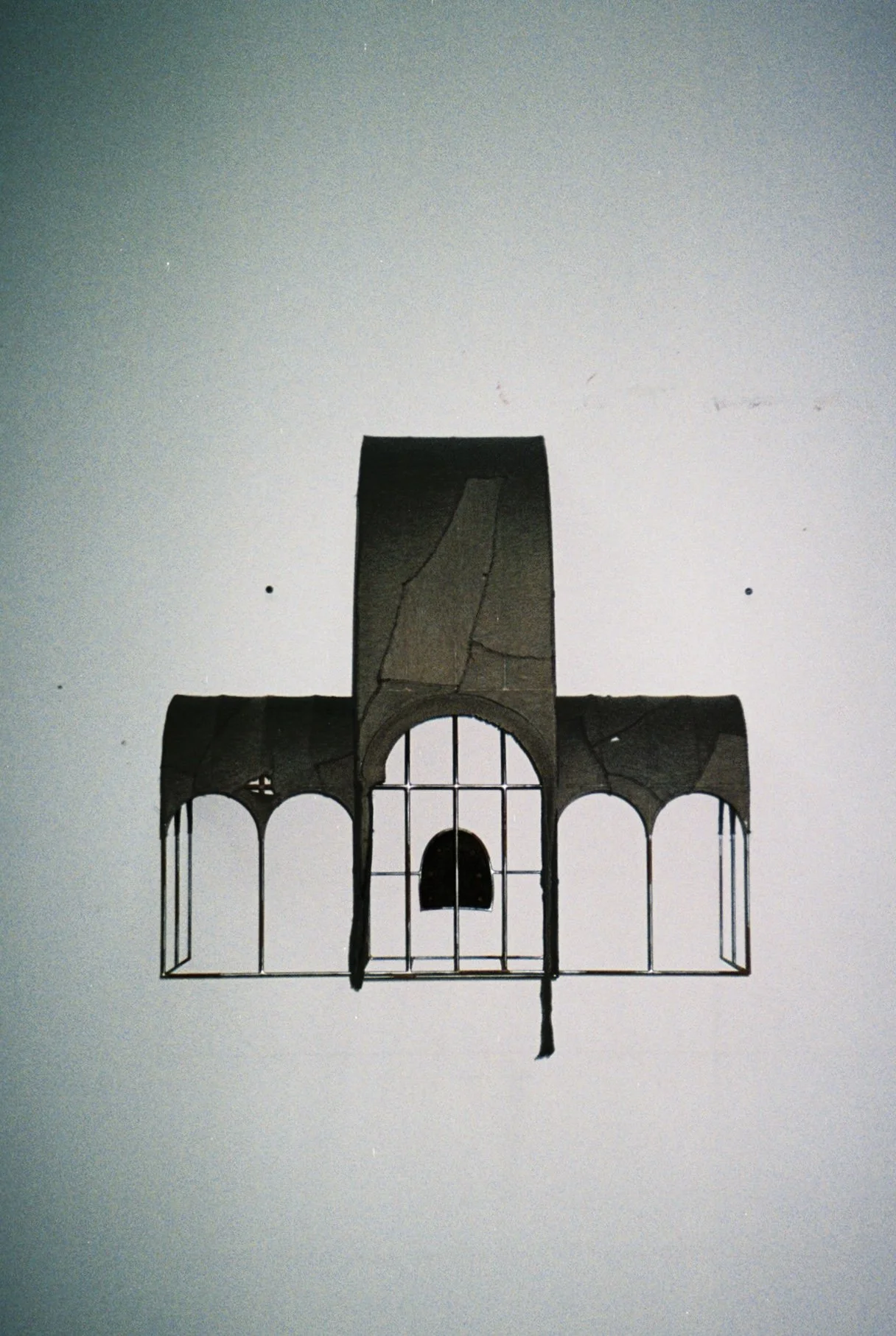
🦓: Some of these forms resemble homes or shelters, while others look to me like reliquaries, for example, which can be viewed as both a historical and cultural reference.
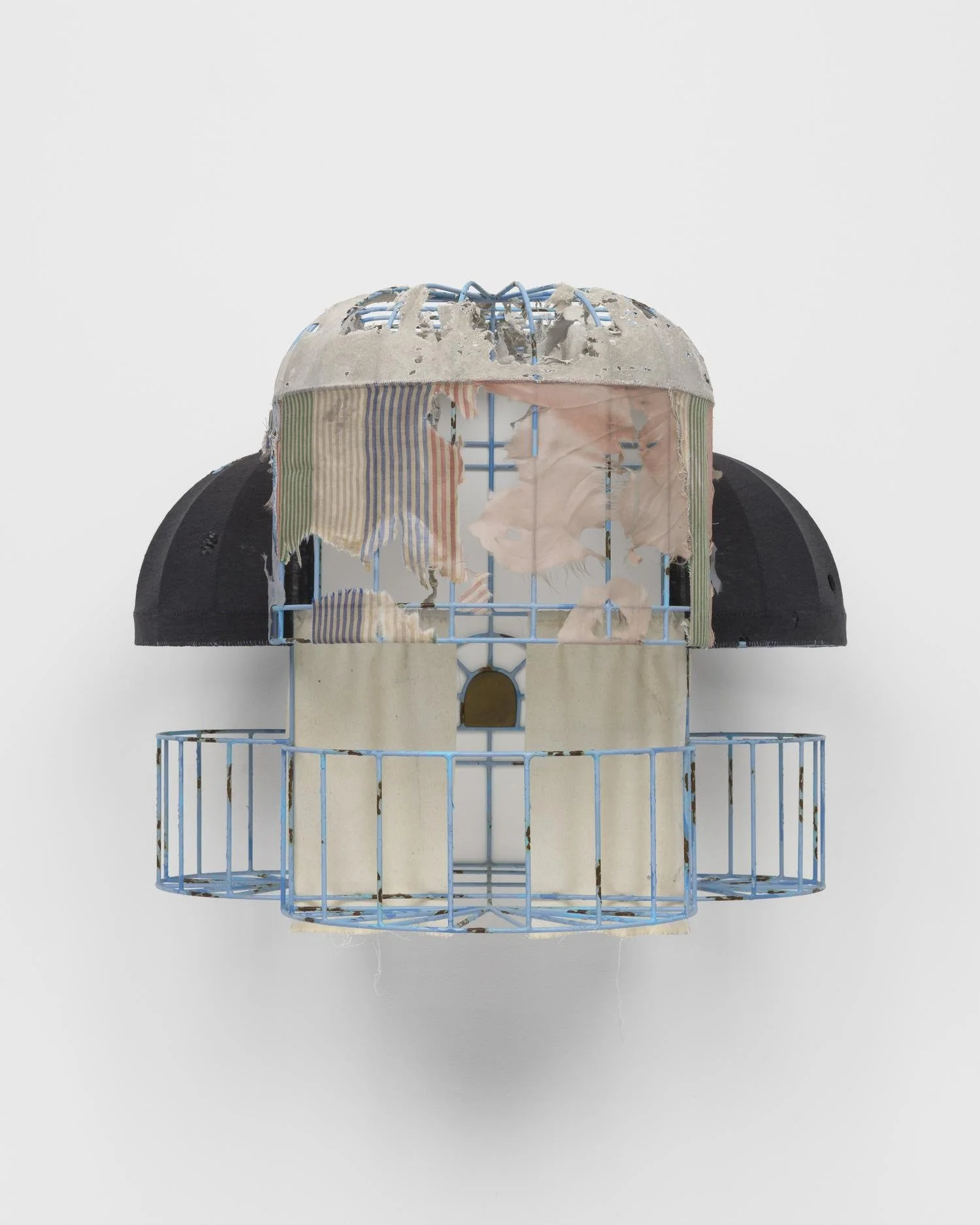
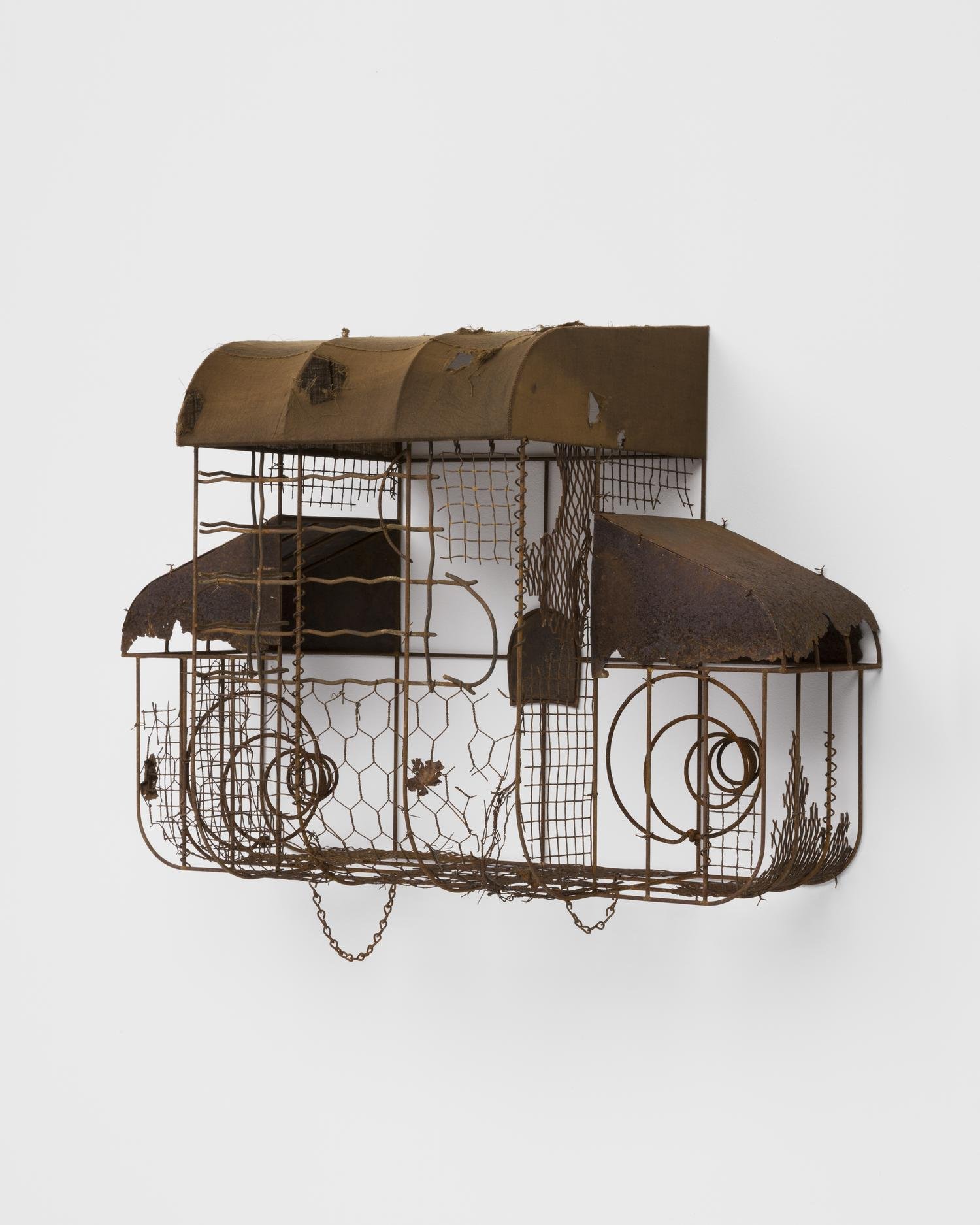
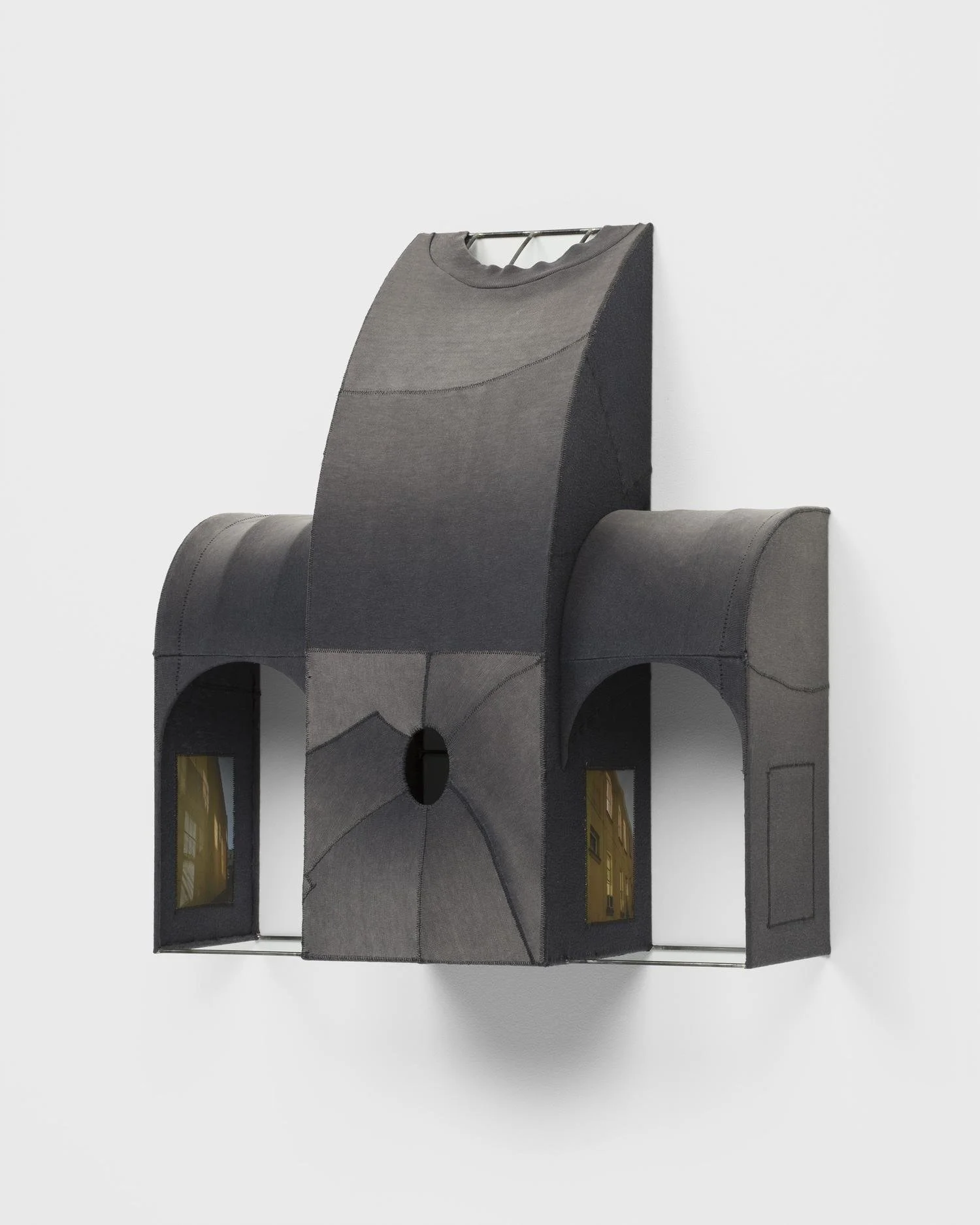
CARIDEO: For sure. The work literally references architectural elements of the city but also gets at a more conceptual idea of architecture. I try to combine the literal and conceptual. For instance, there are echoes between classical building design and the architecture of a prefab window of a New York apartment building, and the architecture of that window can also be seen in the infrastructure of a shoe heel.
🦓: Most of these sculptures feature shoe heels in their interiors, almost like the heart of them. Is there always something there?
CARIDEO: Initially, no, there wasn't anything there. I was focusing on the structure itself, the various forms of awnings, how they relate to the body. But later on, yes. It took a few years to give the structures a sort of a function, something to protect. It was an interesting development, because the structures were based on functional forms.
🦓: What is this function, and what do you see them protecting?
CARIDEO: It’s kind of the inverse of that question: when the heel entered the work, it became like a key that unlocked the system. It provided a sense of purpose. I like that you asked if there’s always something “there”. The question feels like one trying to get at faith or something, if there’s a soul, a spirit, something invisible that you need faith to see.
🦓: Can you tell us about your relationship with found objects? Do you pick up these shoe heels on the street? We’ve also previously discussed the fabric you use to create the surface. Is it important to you that the majority of each sculpture’s components are found?
CARIDEO: I’ve always loved objects and materials that have an evident history. Time is just so beautiful. It sounds trite or basic, but time as a force—time acting as an agent—just creates so much beauty. Yes I pick the heels up off the street. I have hundreds that I’ve collected over 11 years.
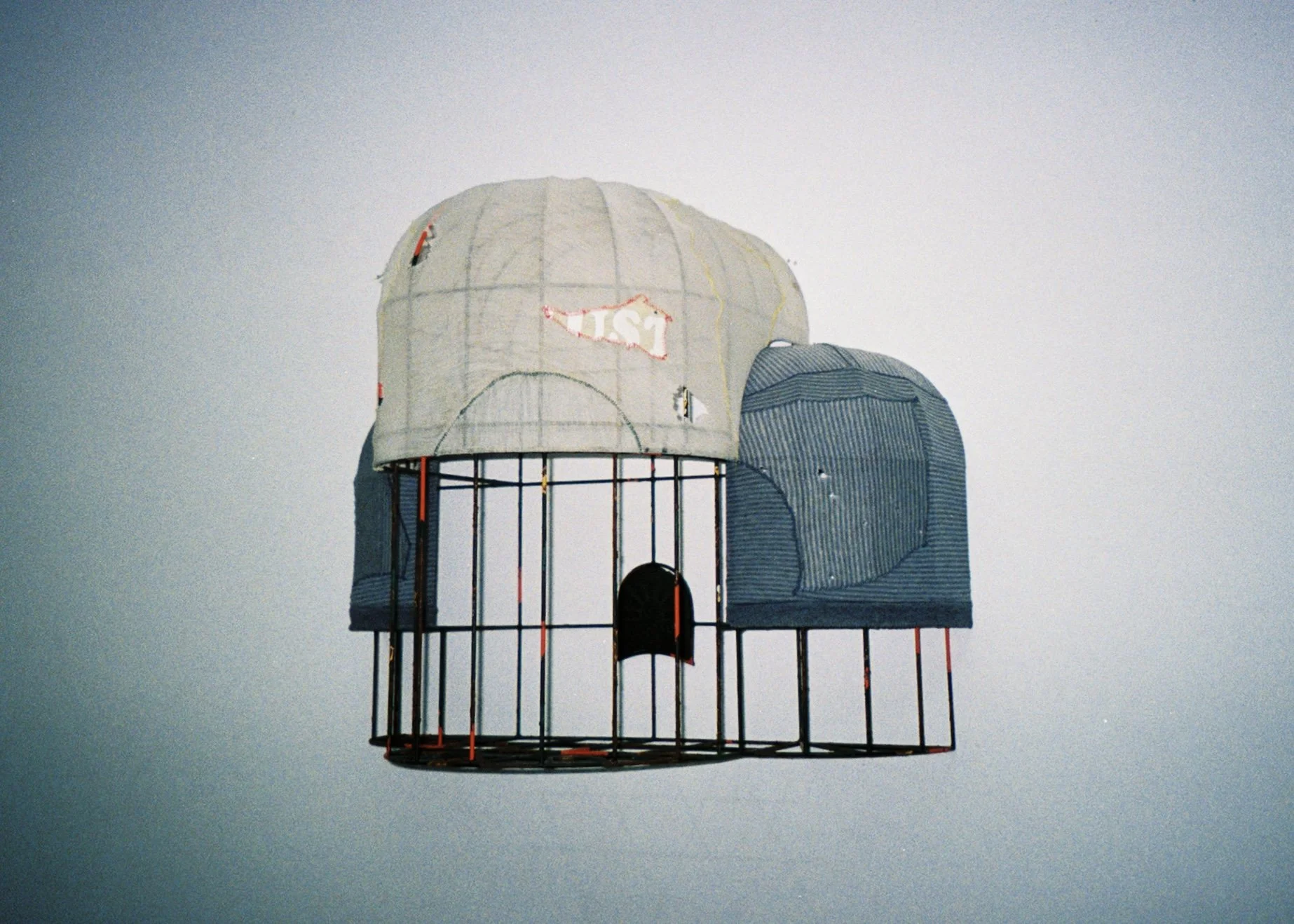
CARIDEO: Lately I’ve been trying to come up with a new term instead of “found materials.” Both words feel wrong. Are they “found” if I already know they are out there? I use things that are usually stationary, like cacti, born and of the place. It’s more of an encounter with something, like an entity - I’m looking for that alternative to “material” - that pre-exists me, just doing its thing. I don’t like my work to be pure creation. I like it to be a collaboration with what’s already there.
🦓: In the fabric you utilize, I see leftovers of erosion, or perhaps more specifically about materiality and decay. For example, you can see holes and sun-faded streaks in these shirts. Is that something that you look for, too? Evidence of time?
CARIDEO: Absolutely. It’s also about specificity. Evidence of time is important, but I've always loved the relationship between specificity and anonymity in a found object.
🦓: How so? That these things used to have another life before you that now remains lost on all of us?
CARIDEO: After collecting a fair amount of shoe heels, for example, I began to see how specific each one was. I thought about how it belonged to an individual, captured a trace of their path, and that there was a matching heel out there that had lost its partner. It has this very specific identity yet remains completely anonymous. Like we’ve talked about, it’s analogous to living in this city.
🦓: An object that feels both so personal and so far away. Do you find yourself waiting to use some of these materials? Why not just take them home when they pique your interest?
CARIDEO: Most of the clothing I use now is now scavenged from the city, from weird public spaces. I like to consider that it comes from either below me or above me. Above me usually means caught in razor wire on top of fences or hanging from something. Below me means in the dirt, unearthed from the ground. This is stuff that evolves to become part of the landscape. The material “above” loses mass from sun, wind, rain. The clothes, fabrics, other material from the ground breaks down in the ground, disseminating into other material. I log the locations of these objects, so when I need something, I know, for instance, there’s a battered beige thing here, a thin pink thing there, and I’ll go get it. This time between noting something and returning for it is special to me. It’s when I start forming a personal relationship with that thing, passing it again and again, knowing it’s there even when I’m far away.
🦓: Is the “knowing” of the material a crucial part of the practice, too, as opposed to incorporating objects you’re unfamiliar with?
CARIDEO: It’s a strange relationship with the thing, it’s like… Say you ride the train with somebody every day and you've never spoken to them. You've seen them, you've maybe sat next to them. You've come up with some stories about that person. Maybe you've had some fantasies. They've become a fixture. You have a passive relationship with them. Is that person a stranger? I don’t know if they are. It’s similar to an object or material that I pass frequently. Do you know what I’m talking about?
🦓: A little too much. I have a guy that gets on my train every day. He gets on two stops after me and gets off at the same stop I do, every day without fail. Same shoes, orange and red Air Force 1s, and the same hat that reads New York or Nowhere. I’ll notice when one of these things changes. I’ve looked over at his phone screen, so I’ve seen his name from when he makes an online Starbucks order. Weirdly, I think he has no idea who I am, but I get what you’re saying. If I ever need a human for a sculpture, I’m sure he’d be it.
CARIDEO: No way. Do you go to that Starbucks?
🦓: No, that's a little freaky. When he orders and I see him order, I'll get coffee somewhere else. Active avoidance. I don’t know if he notices me at all. He's on Reddit on his phone all the time.
CARIDEO: This is interesting, because it implies that you also enter the same train car every day, and you have the same routine as someone else, a similar path, two shoe heels relating to each other... which touches on what we were talking about before.
🦓: How does it feel, walking this line between recognition and anonymity?
CARIDEO: It’s very strange— the process of making art, paying very close attention to my surroundings, noting things, then reencountering them with a certain joy or curiosity is a form of personifying everything in the world. I have the same feeling reencountering a shredded plastic bag tied to a fence as a person that takes the same train route as me.
🦓: They take on their own life.
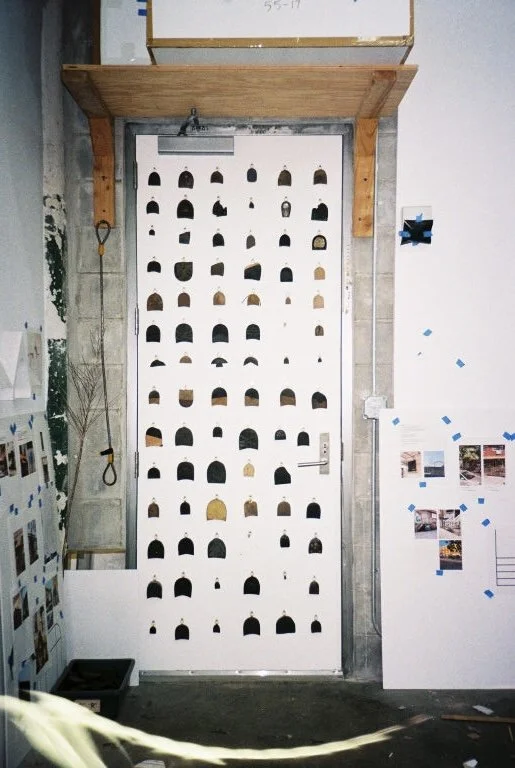
A collection of shoe heels in Carideo’s studio
🦓: Can you tell us about your process? Your work hasn’t always taken shape in these sculptures.
CARIDEO: My work hasn’t always taken these forms, no. I’ve always considered my work sculpture, whether it results in objects, photographs, or video. It’s a way of “relating to the history of objects”, as Mark Manders put it. My work has always begun with observation though, which is a throughline. Observation becomes a thought, which sparks form...
🦓: Can you give us an example of an artist you admire who follows that framework?
CARIDEO: Ellsworth Kelly is a classic. A lot of his work is based on observation, and there’s this incredible lineage you can trace, from a photograph to a drawing to a minimalist painting. When you see the painting, it’s just a curve on canvas, a form of minimalism, historic painting, but it’s also a smashed paper cup on the street.
🦓: And then that observation has a relationship with another observation.
CARIDEO: Yeah! Take the form of an awning. At the very beginning I saw the correlation between two obvious observations: the disintegrating material of awnings, falling off the bone, and my own beloved weathered t-shirts in my closet, that I could no longer wear but didn’t want to simply hang in darkness. As the forms I was making connected more with the body, and as I composed the forms to feel balanced, I realized this somewhat uncanny relationship with Vitruvian rules of classical architecture. That gave way to tons of observations, correlating basilica floor plans to colonial-style windows, sidewalk pavement patterns, keystone arches, and again, the body.
🦓: And you begin by drawing them out?
CARIDEO: I draw different elements out, yes. One shape is never just one thing, though.
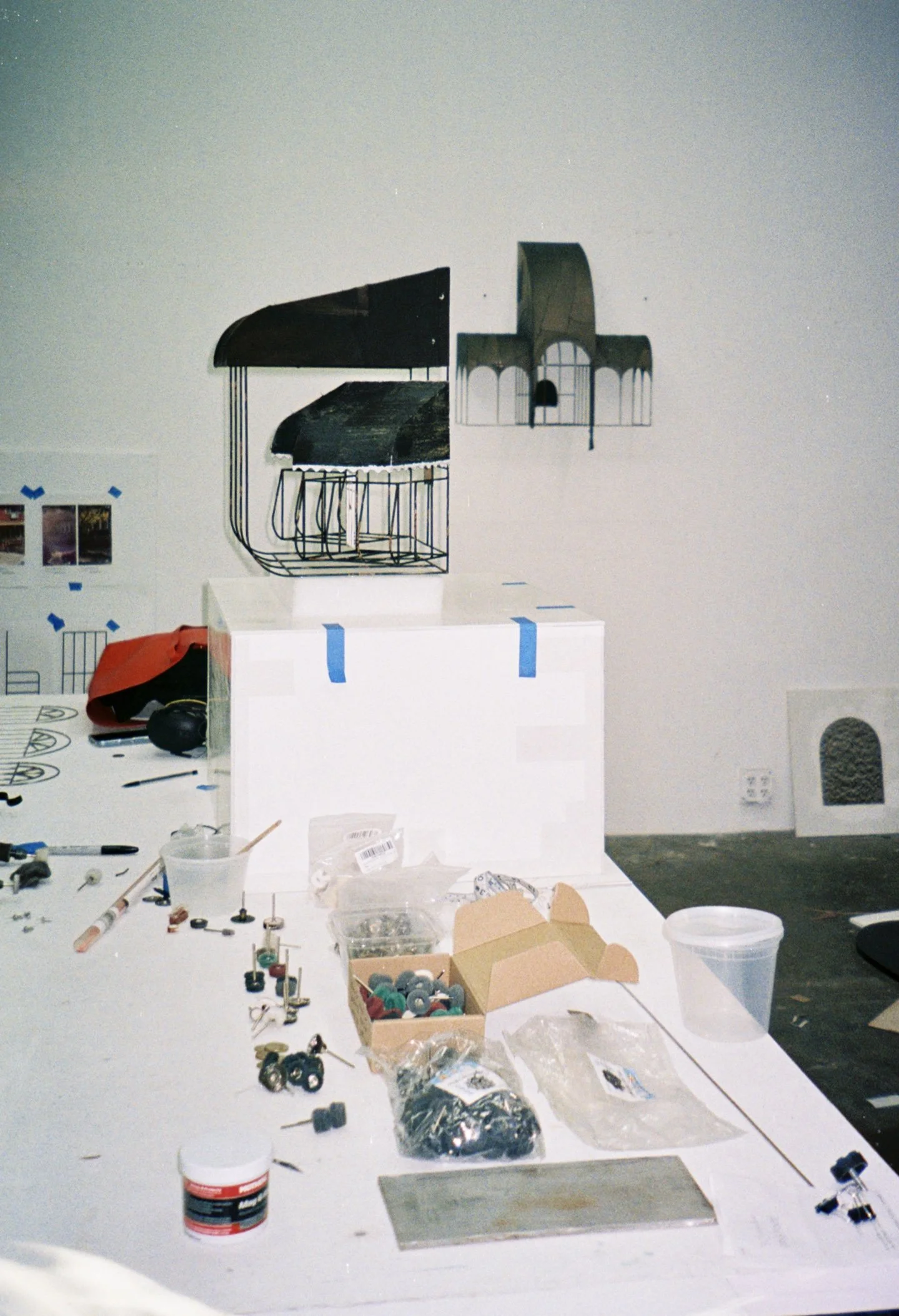
🦓: What about this practice of observation is most important to you? Is it about contextualizing yourself somewhere, or more of a bringing back of a thing that’s been forgotten?
CARIDEO: The world is so formally compelling that I can’t help but work with what I see. It’s more of an operation out of instinct, and I love how it connects me with other people, what they see and look for in the world, our overlaps, shared interests.
🦓: You want to get them to look?
CARIDEO: I don’t want to make my work ask a viewer to do anything. I don’t love the idea of an artist trying to impose something on a viewer. But I love that my work might have an effect on how people view their environment.
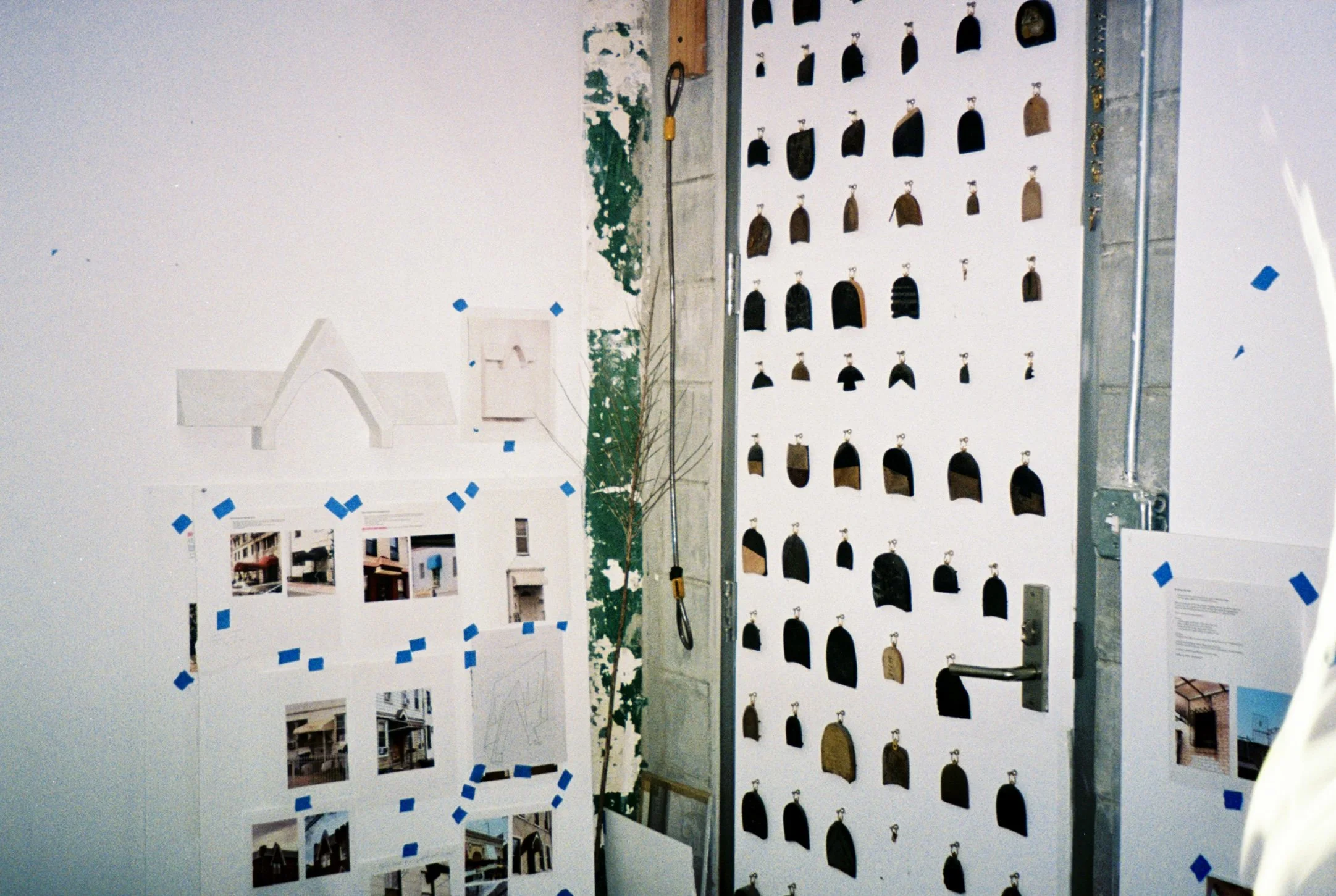
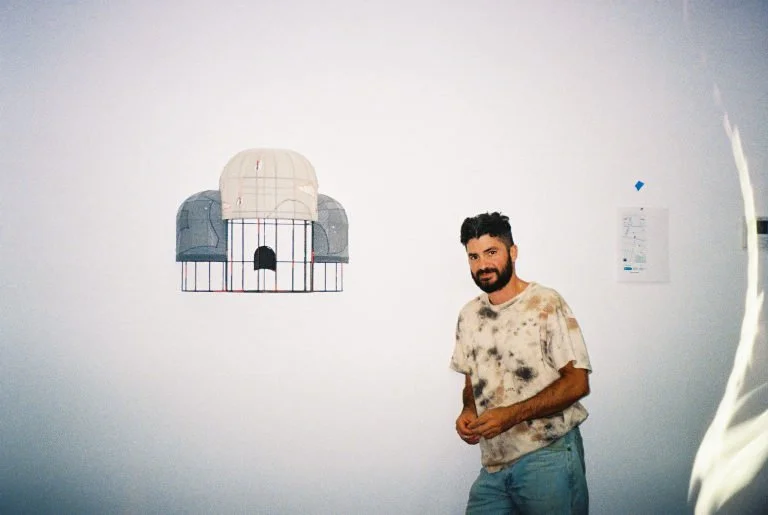
🦓: Could you make the argument that your work is site-specific, since you emphasize so heavily the influence on your environment on the form of each sculpture?
CARIDEO: Hmm, I like the question, but no. The second part of the compound word—“specific”—yes, for sure. It somehow works if you break the two words apart (ha). In fact, I’ve always had a desire to make work that connects me with multiple places at once, a form of multi-presence or simultaneity. The process leading toward a sculpture requires hyper-presence in a place, but the resulting object suggests, to me, an omnipresence, a flattening of time, as art often does.
🦓: You mentioned earlier that you feel non-physical aspects of observed life make its way into the work. Does this mainly look like scenarios that occupy you or people you’re around?
CARIDEO: Yes. Working does a lot of things for artists beyond what you intend for the work to “do.” It’s a lifestyle, and in that, it reflects the way I want to live, see the world. It can maybe be seen as searching for idealism in a non-ideal world.
🦓: Are you looking for signs?
CARIDEO: I think so! It’s all there, really.
🦓: This idea of everything coming from everything else I assume is connected to what you said earlier, of never wanting pure creation. Things need to already be out there?
CARIDEO: Right, and I’ve found this phenomenon—an observation—in which my work ends up speaking very directly to where I live, but also where I want to live, or what I want the world to look like.
🦓: Back to the subconscious: are you interested in these secret parts of your insides sort of spilling over?
CARIDEO: Yeah. It’s strange and insane how anything you create or put out will clearly have this stamp from your subconscious. Obviously your consciousness has influence and will, but you can find hints of something that’s miles away right outside.
🦓: What do you feel like this is working towards? Is there something you’re searching for, something that you’re hoping will be just around the corner?
CARIDEO: Sometimes I think I’m working towards harmony. It’s something I’ve never said before.
🦓: Balance? Satisfaction? Or a more literal final result?
CARIDEO: Often, a driving force in the physical process of making a work, is searching for some form of harmony. It feels good to make a harmonious object from the disjointed, un-unified, fucked up elements of a place. Once I know harmony is possible, I can choose to disrupt it if need be, if the work is asking me to.
🦓: They’re natural, and emulate the harmony that you see in the world. A harmony that you’re saying comes naturally with chaos and time and everything in between.
CARIDEO: Sure. The world is harmonious, perhaps especially when it seems disjointed. Maybe my sculptures are a way of objectifying that.
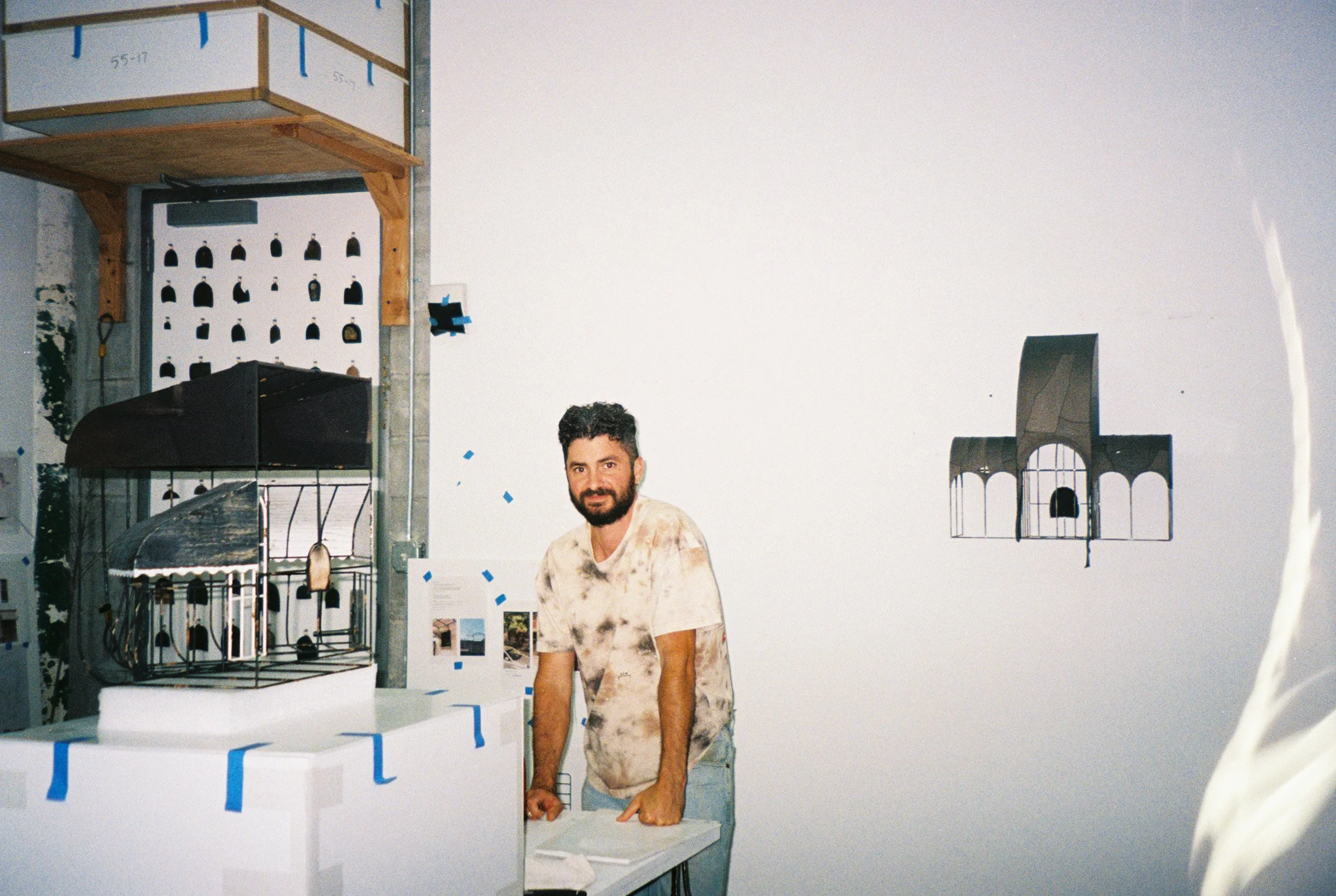
🦓: It’s funny, this printed image of an AC unit behind you really echoes your point to me. I suppose it’s making me think about things that are created to fit perfectly around this preexisting other thing, things that are perfectly shaped to contain each other.
CARIDEO: Some things fit perfectly.
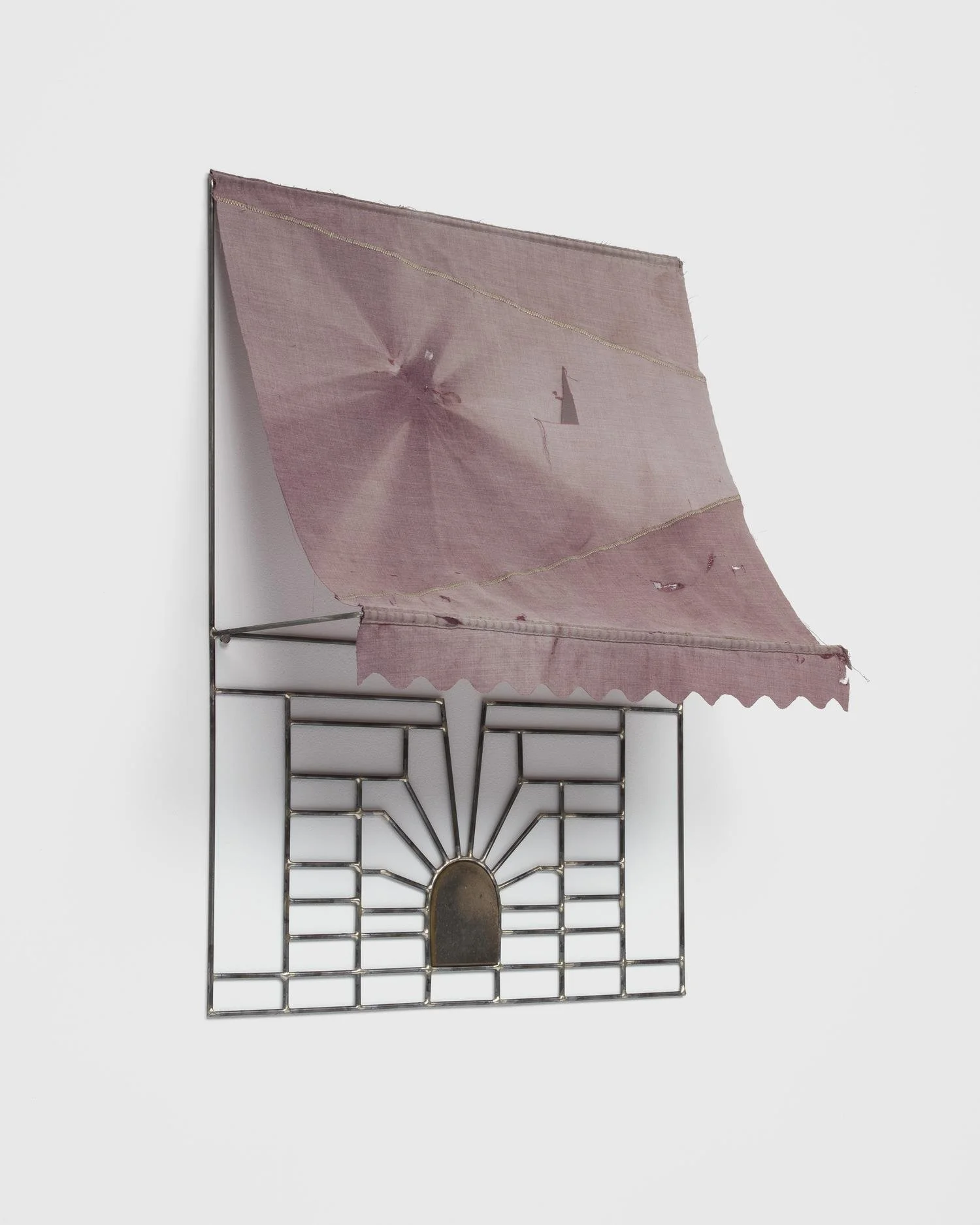
Greg Carideo (b. 1986, Minneapolis, Minnesota)
Greg Carideo (b. 1986, Minneapolis, MN, USA) lives and works in New York, NY, USA. He received a BFA from Minneapolis College of Art & Design, Minneapolis in 2008 and an MFA from New York University in 2015. Selected solo exhibitions include groundwork, Public Gallery, London (2025); Nave, In Lieu, Los Angeles (2024); Dog Eared Reverie, Foreign & Domestic, New York (2023); Storefront, FR MoCA, Fall River (2022); and Framework, GRIMM, New York (2021). His work has been featured in recent group exhibitions at The FLAG Art Foundation, New York (2025); Jack Barrett Gallery, New York (2025); Silke Lindner, New York (2024); Pangée Gallery, Montreal (2024); 12.26 Gallery, Dallas (2024); Galerie Nicolas Robert; Montreal (2024); Margot Samel, New York (2024); Public Gallery, London (2024); ICA, Portland, ME (2024); and International Objects, New York (2023). Several of Carideo’s exhibitions have garnered press, including a New York Times review for his solo exhibition, Dog Eared Reverie, Foreign & Domestic, New York (2023), a BOMB: Studio Visit for his solo exhibition, groundwork, Public Gallery, London (2025), as well as group exhibitions featured in Cultured Magazine, Artforum, and the New York Times.
