
CATO OUYANG
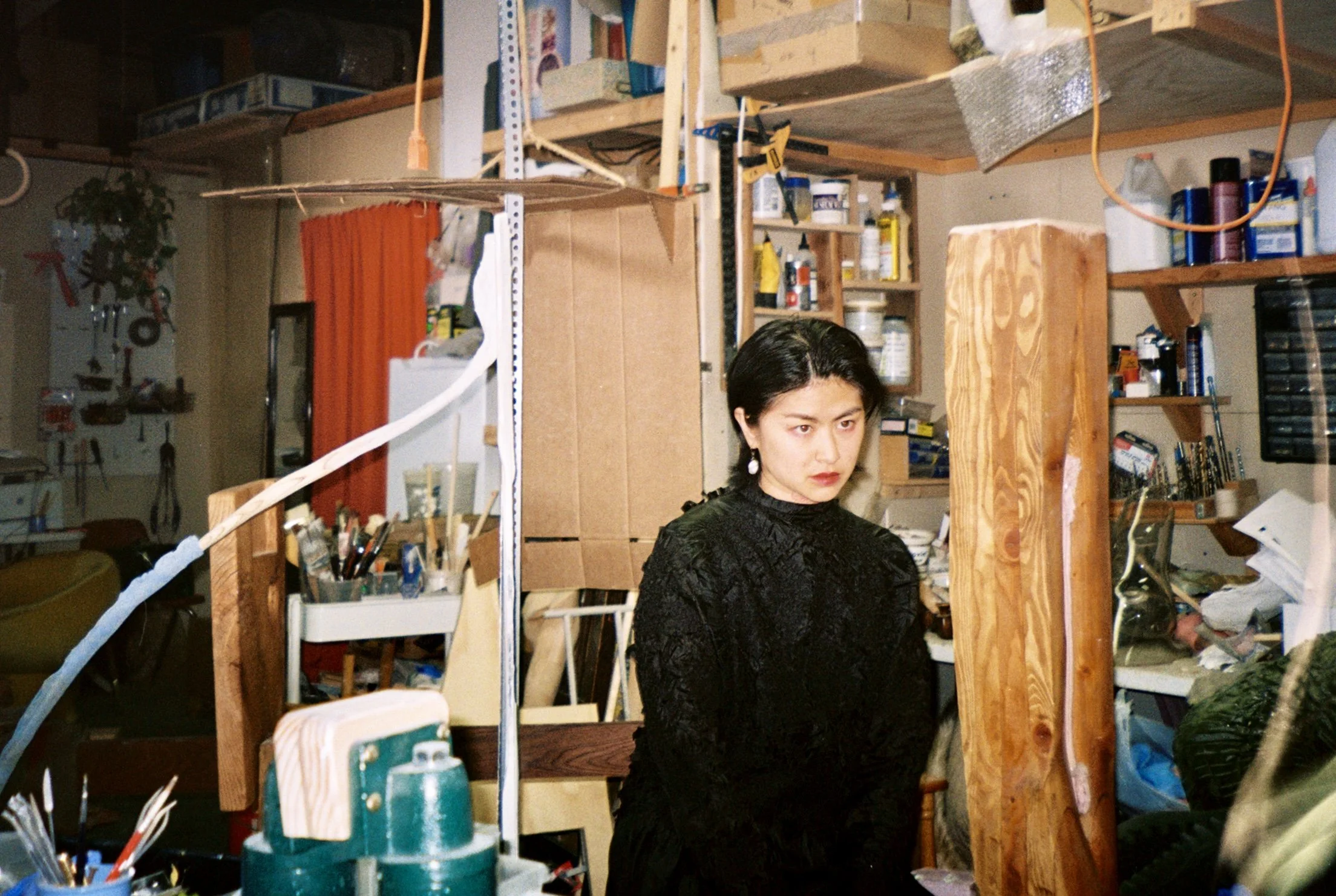
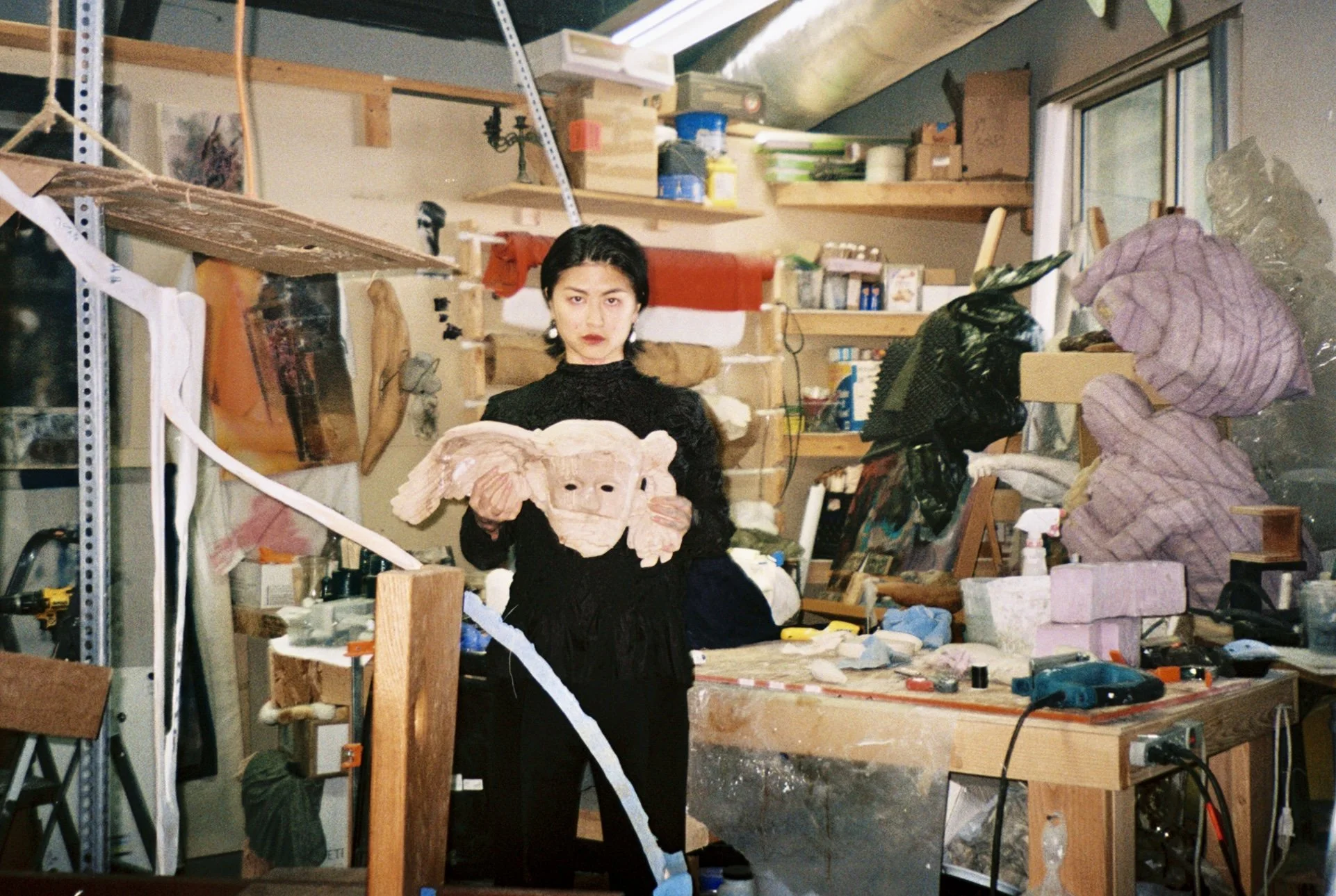
Ouyang in their studio
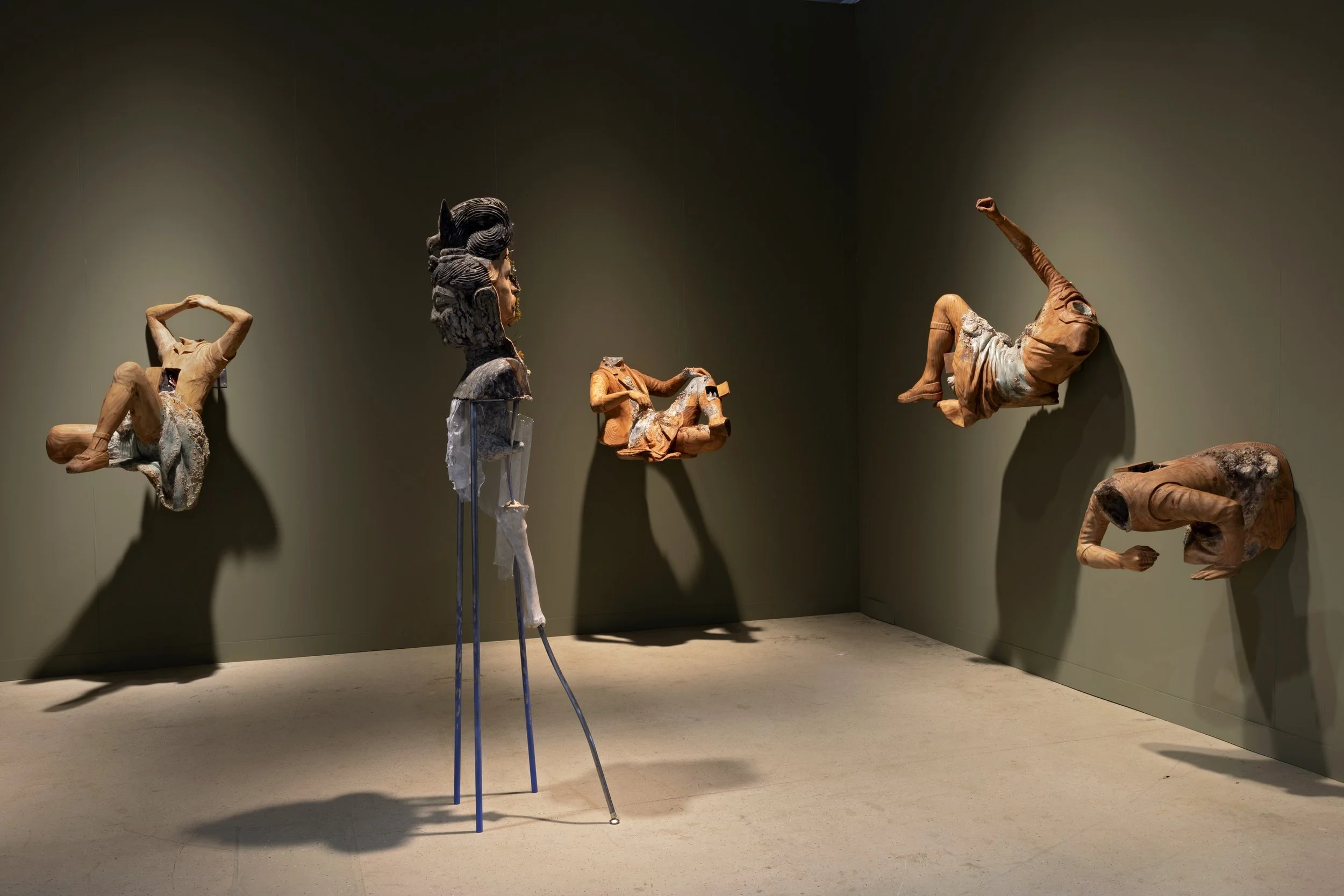
ZEBRA PRINT: Let’s start with the significance of the body in the work. The first sculpture of yours I saw was of a figure with no head. I’m curious as to what the significance of headlessness—or severed parts?—is to you.
OUYANG: All of the work starts from embodiment and proprioception. We have subjectivity, memory, and desire because embodiment is how we interface with the world. In our sensory faculties, affect is generated and expressed. When I think about longing, fear, hatred, joy, and triumph, that is all located in the senses and the vagus nerve. I come from a background of photorealistic rendering, and I spent a lot of time as a child studying anatomy. Part of my continued interest in rendering the figure is that it was my foundation. It continues to be my place of joy in making.
🦓: Do you feel more in tune with or connected to your body following these studies?
OUYANG: I’m not a dancer, but I did gymnastics as a child, which eventually mutated into compulsive exercise as a pre-teen, compounded by an eating disorder. For me, the body has always been framed by discipline and punishment. I have a neurotic relationship to movement and how the body scales to and against movement.
🦓: And who are these sculptural bodies scaled to? Do you have a model you’re recreating?
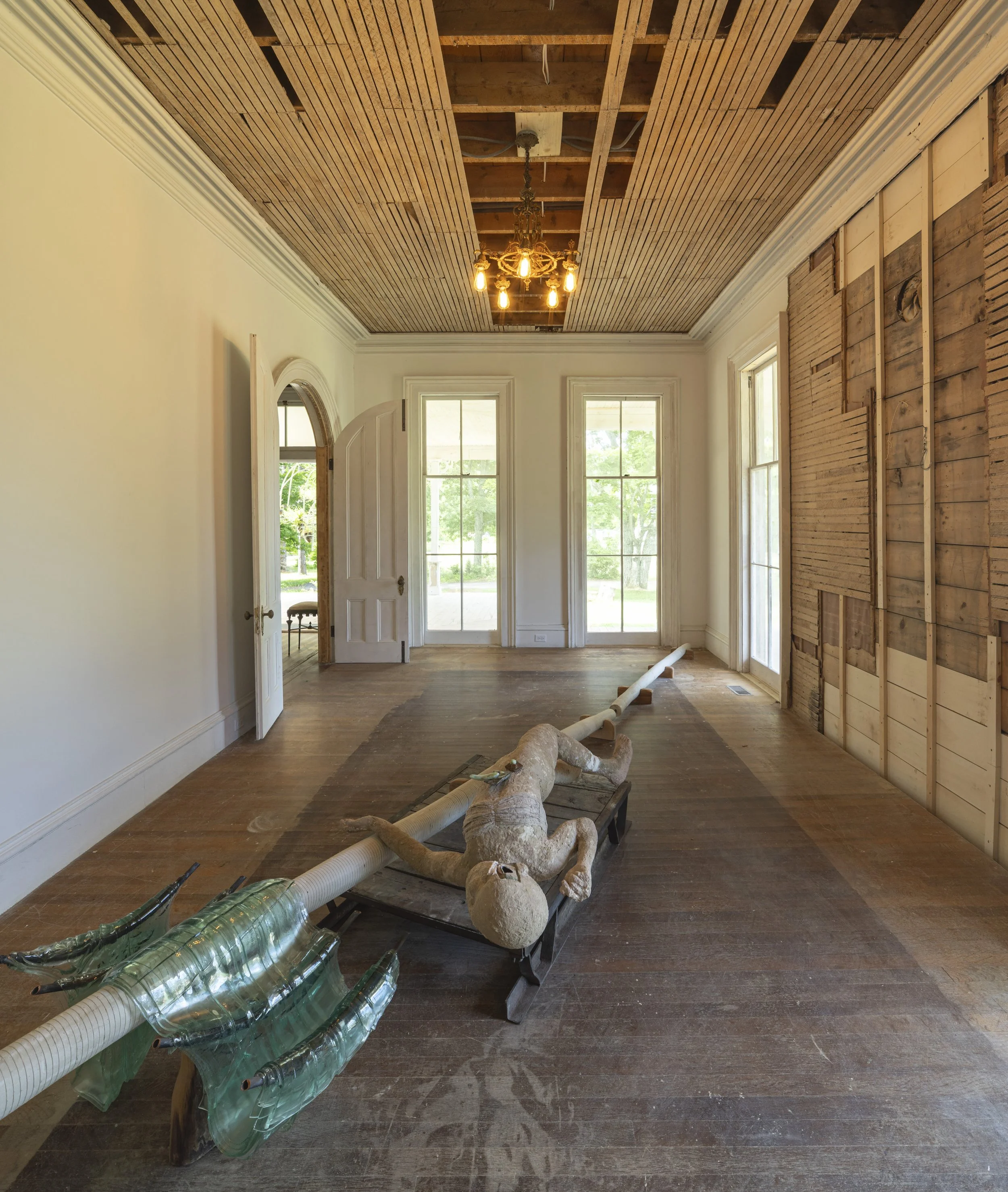
OUYANG: When I’m making these figures, I look at parts of my own body for reference, so everything is, for the most part, scaled to me without actually being a self portrait. Going back to your question about headlessness: as a kid, I was self-taught, and my favorite artists were Symbolists and Surrealists. I emulated their work and dealt in hacked-up, flayed women. I didn’t know anything about feminism or misogyny and how these forces manifest in visual culture. Then, once I did, I went through a phase where I decided I didn’t want to fragment the body anymore. Fracturing the body was sexist, it was misogynistic. At the time, I wanted to make the feminine body big, I wanted to multiply it, scale it up.
🦓: Rather than chopping them up.
OUYANG: Yeah. For a couple of years, I cycled through a series of self-imposed, anti-heteropatriarchal, non-Eurocentric rules. No rectangles, no right angles, no European references, no chopped up women. I think I had to do that so that I could eventually return to working with fracture and the fragment with a renewed sense of agency.
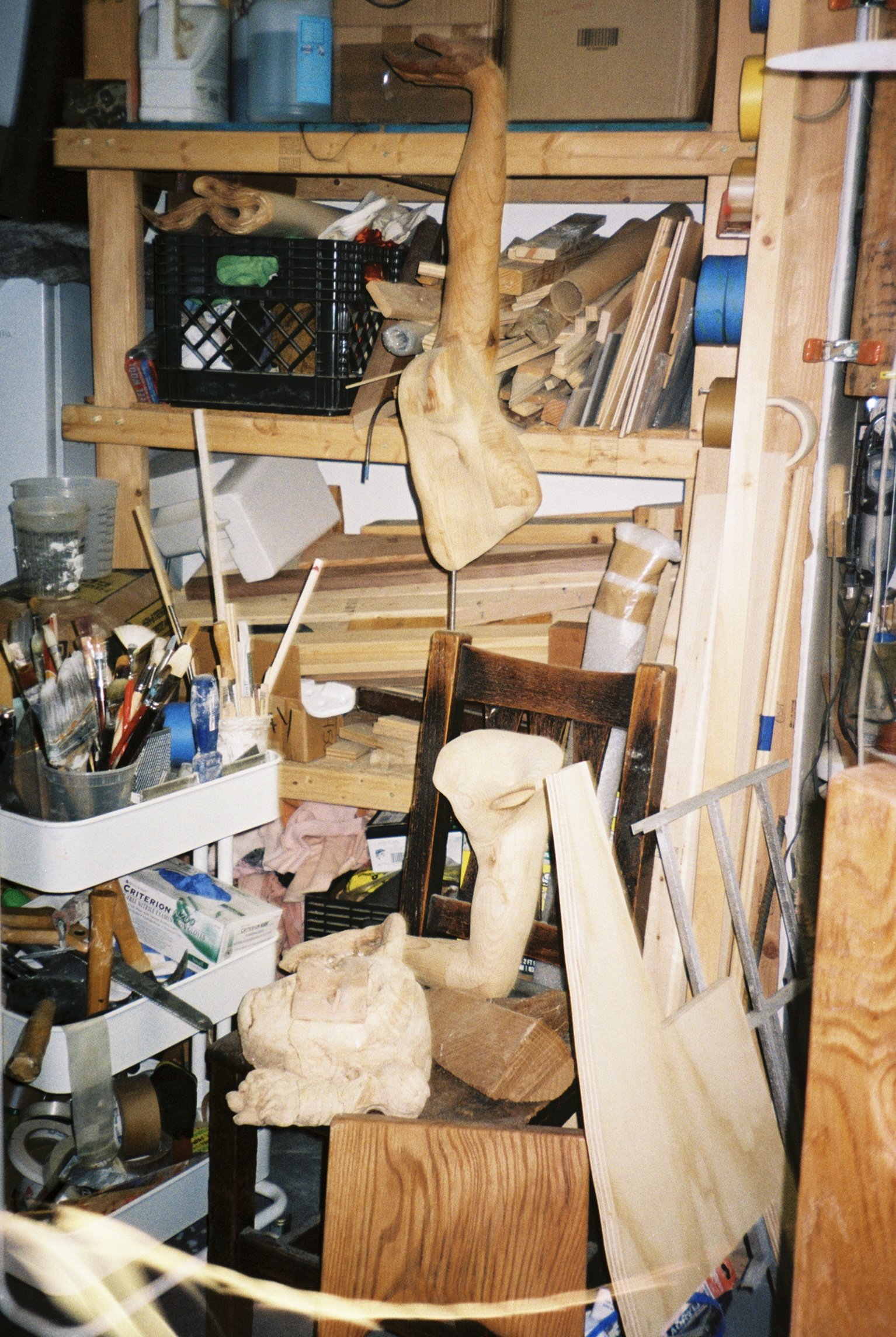
OUYANG: Even going back to some of my earliest text-based and video work, my presiding strategy for making is one of collage, which arises in a Western art historical tradition from a Modernist, Primitivist, colonialist context. Yet for all its fraught origins, this approach of collecting and reframing is what energizes me, I insist on enacting it. I think that speaks to this unavoidable aspect of how perception, experience, and information is mediated for any person living today, or within the last century.
🦓: So this kind of disembodiment and defamiliarization of your figures feels like something that cannot be denied.
OUYANG: In the past several years, I’ve been interested in equivocal moral spaces, like the perversity of a child, or the mutually extractive power dynamic of sex work. And rather than passing judgment or trying to propose solutions, I’m trying to sit within that difficult terrain. So fracture is a big part of that, as well as the subsequent action of mending and suturing. For everything that is fragmented, there is a Frankensteinian gesture that follows, of re-forming something new.
🦓: It’s interesting, also, that the context around the body and this Frankensteining has changed. We’re seeing this obsession with optimization in tech and artificial intelligence now, one that’s so eager to merge man with technology in a way that’s less about advancement and more about maximizing labor and effectivizing submission. Following these ideas of fragmentation—this disintegrating before putting back together—does it then become more about the psyche than the human body at this point?
OUYANG: I’m not a philosopher by any means, but I probably ascribe to the maybe-outdated notion that the body is the soul, the body is the psyche. They are inextricable.
🦓: What’s the relevance of putting things together, in conjunction with the body? You join furniture, pre-existing sculptural and functional objects…
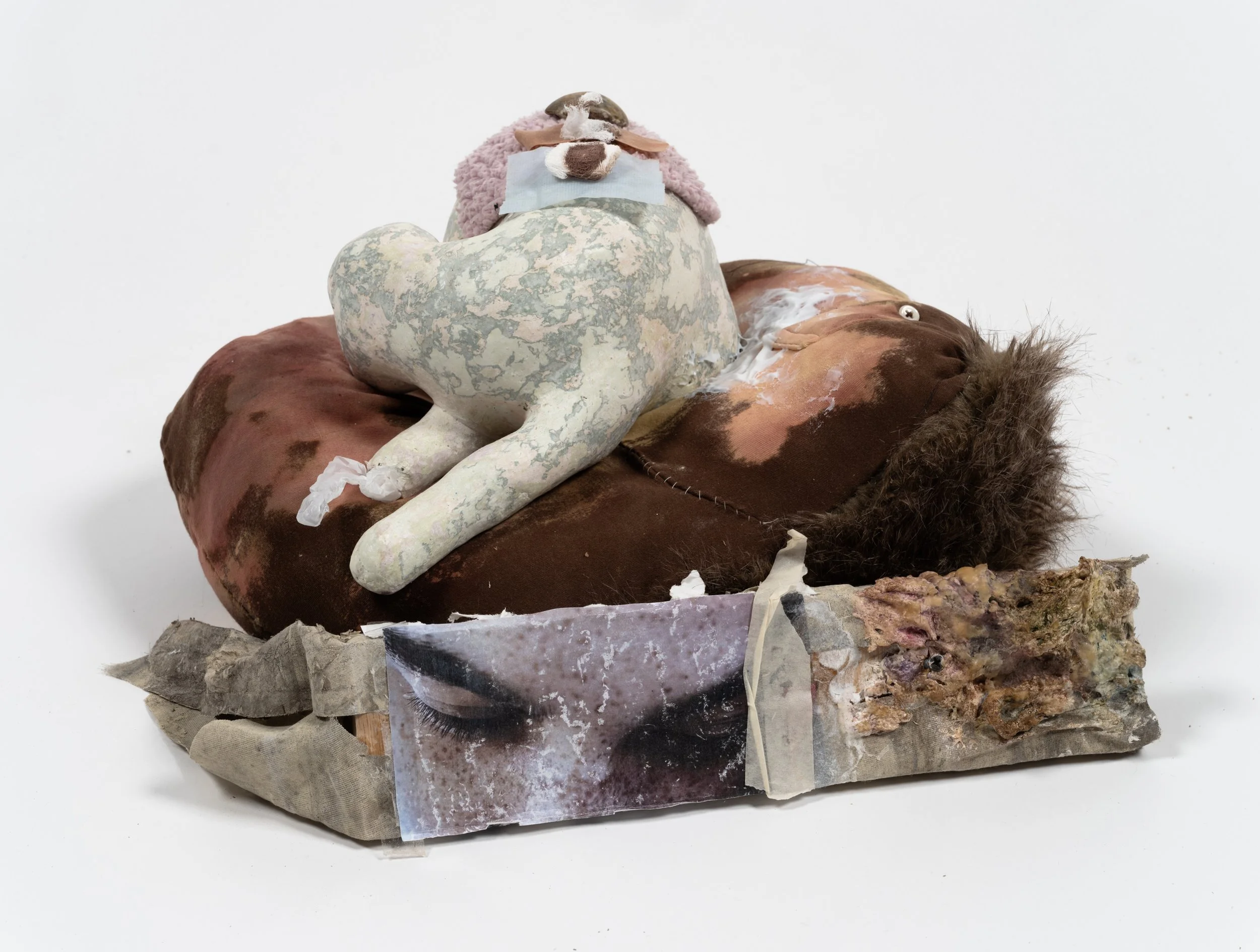
OUYANG: A lot of the process is pretty intuitive, so rather than working with plans or diagrams, I begin with either creating or sourcing individual parts. Then I tetris them together, whether directly or using cardboard scale models. Or even, in my too-small studio, things are visually layered from any one vantage point, and the sheer visual noise of my space creates serendipitous combinations that I end up integrating into works.
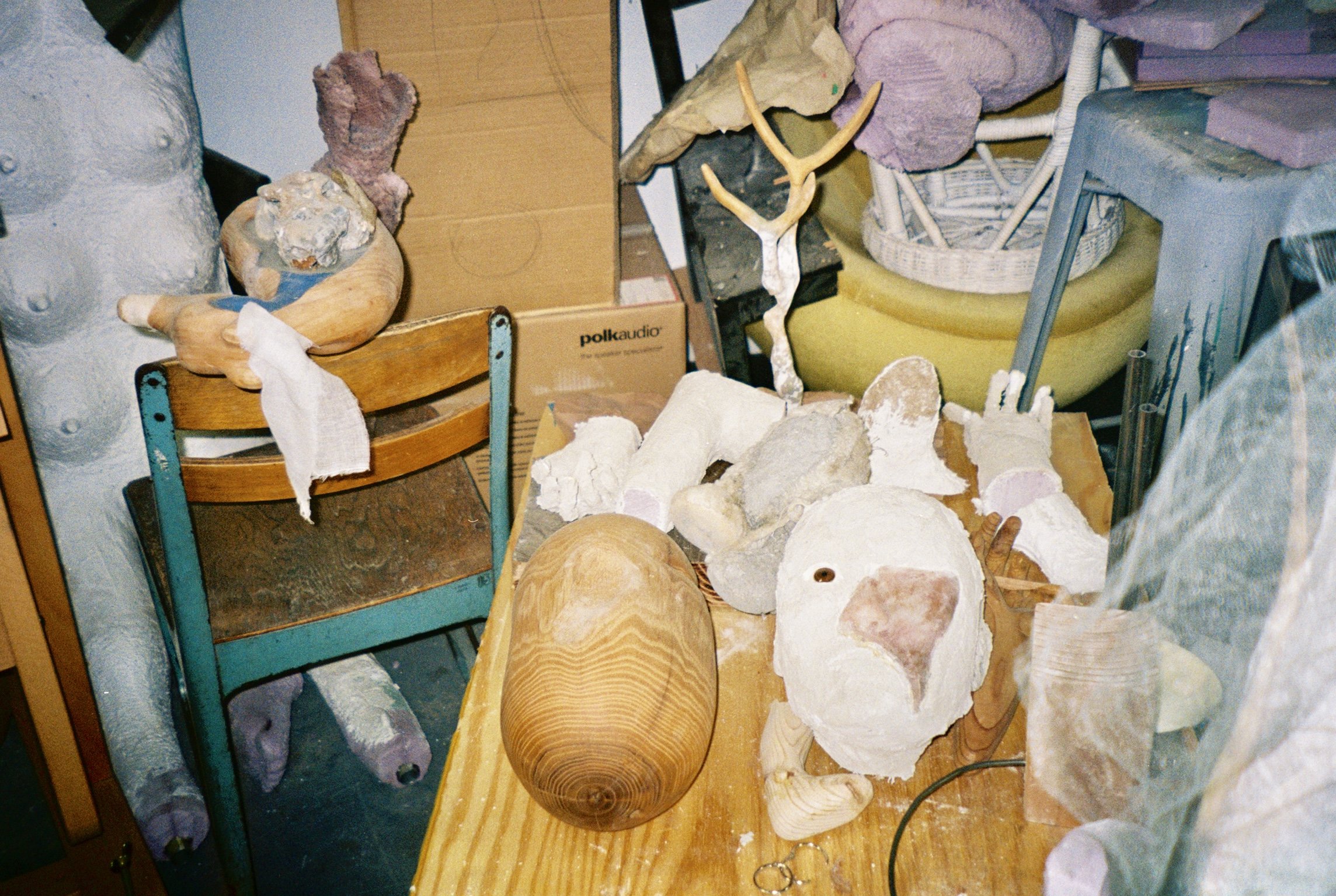
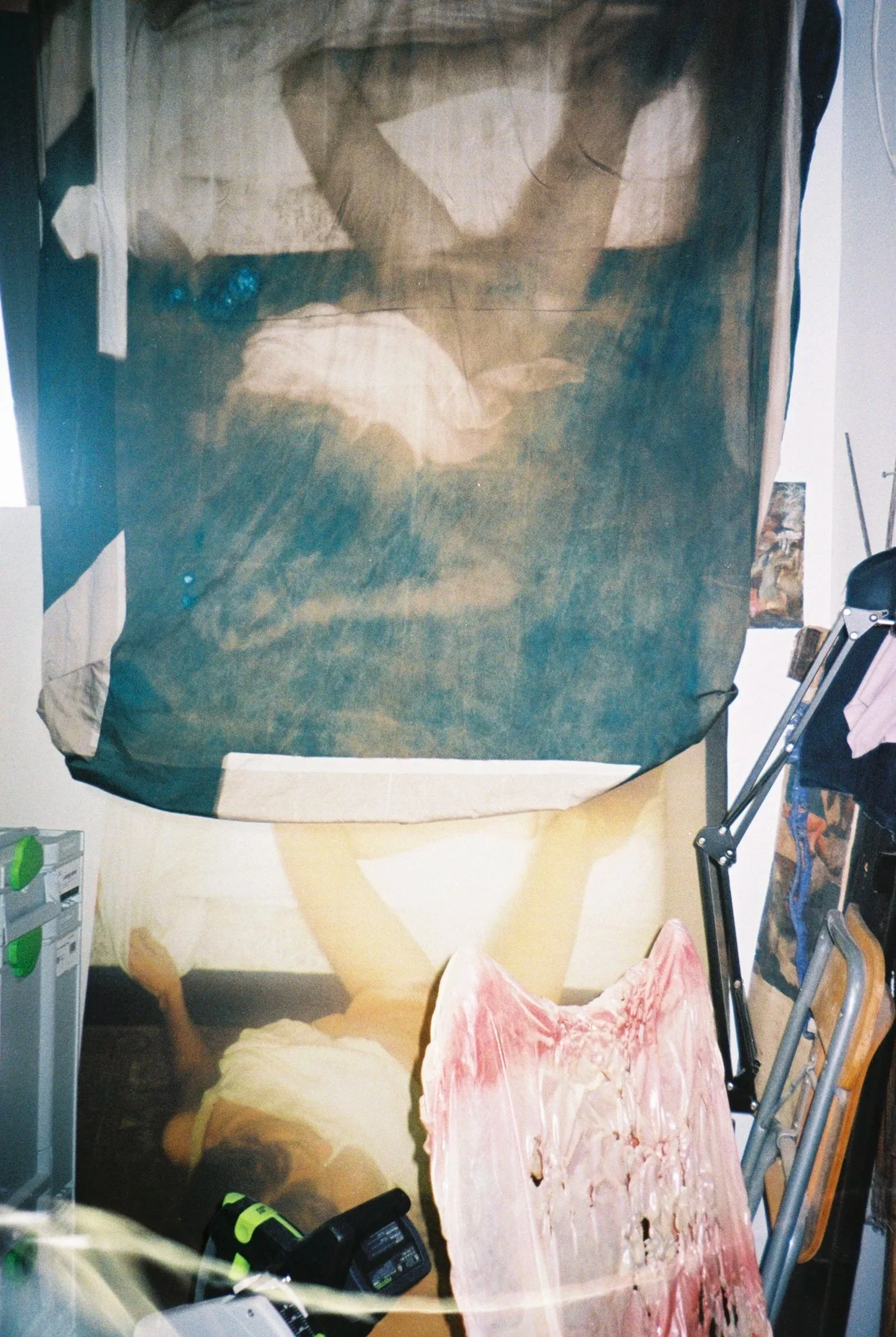
Ouyang’s cyanotypes
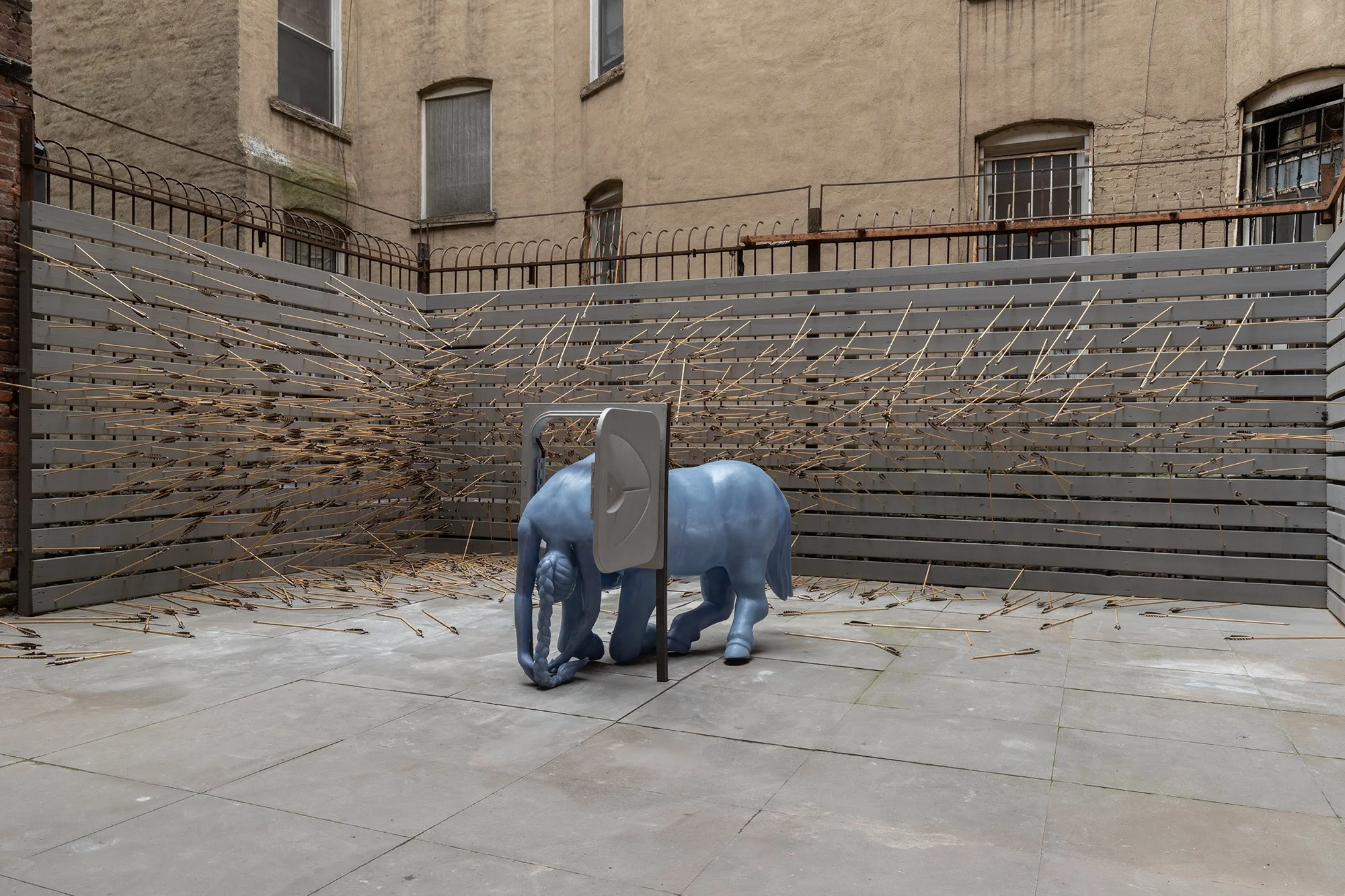
OUYANG: I first began working with and collecting furniture in a way that a lot of artists use furniture: thinking about the movable parts of architecture, of the built environment, the home and the school. These spaces where commensality, sociality, and etiquette are instilled hand in hand with discipline, fear, shame, and conformity. I went to public school, so the space of education was really one of organizing bodies and teaching obedience. There are already such strong associations and memories inscribed into these objects. Over the past couple years, the elements of furniture have become more abstracted. I’m constructing more of them from scratch, so the forms are starting to reference certain building strategies like joints or connective mechanisms, rather than using the readymades themselves.
🦓: You mentioned that you're taking this year to learn more things, one of them I assume is woodworking. How has that been, is there a joy in that process?
OUYANG: Joy might not be the word…I hate learning new things. It’s immensely humbling, and humbling is the neighbor of humiliating. I grew up a child of Chinese immigrants, with a severe case of Gifted Kid Syndrome: if I didn’t excel, there was punishment at the other end. Answer a question wrong in class, face turns red, I’m crying, everyone is pointing at me because I’m supposed to be that kid who always has the right answer. I think that fear of being wrong or unexceptional plagued me through all six years of my art schooling. In my undergrad, I could have been learning how to weld or do carpentry or take a foundry class. But I didn’t take any of those classes. I took discussion seminars, I did a lot of reading. I wanted to get smart, be a conceptualist. Yale was somewhat similar, there were resources available to learn how to machine something or model something for the CNC machine. But I’ve always been so resistant to learning new skills. I actually don’t really know how to weld. If somebody sets it up for me, I can do it, but I’m very bad with maintaining machinery. I use a thing until it breaks and then I give it away.
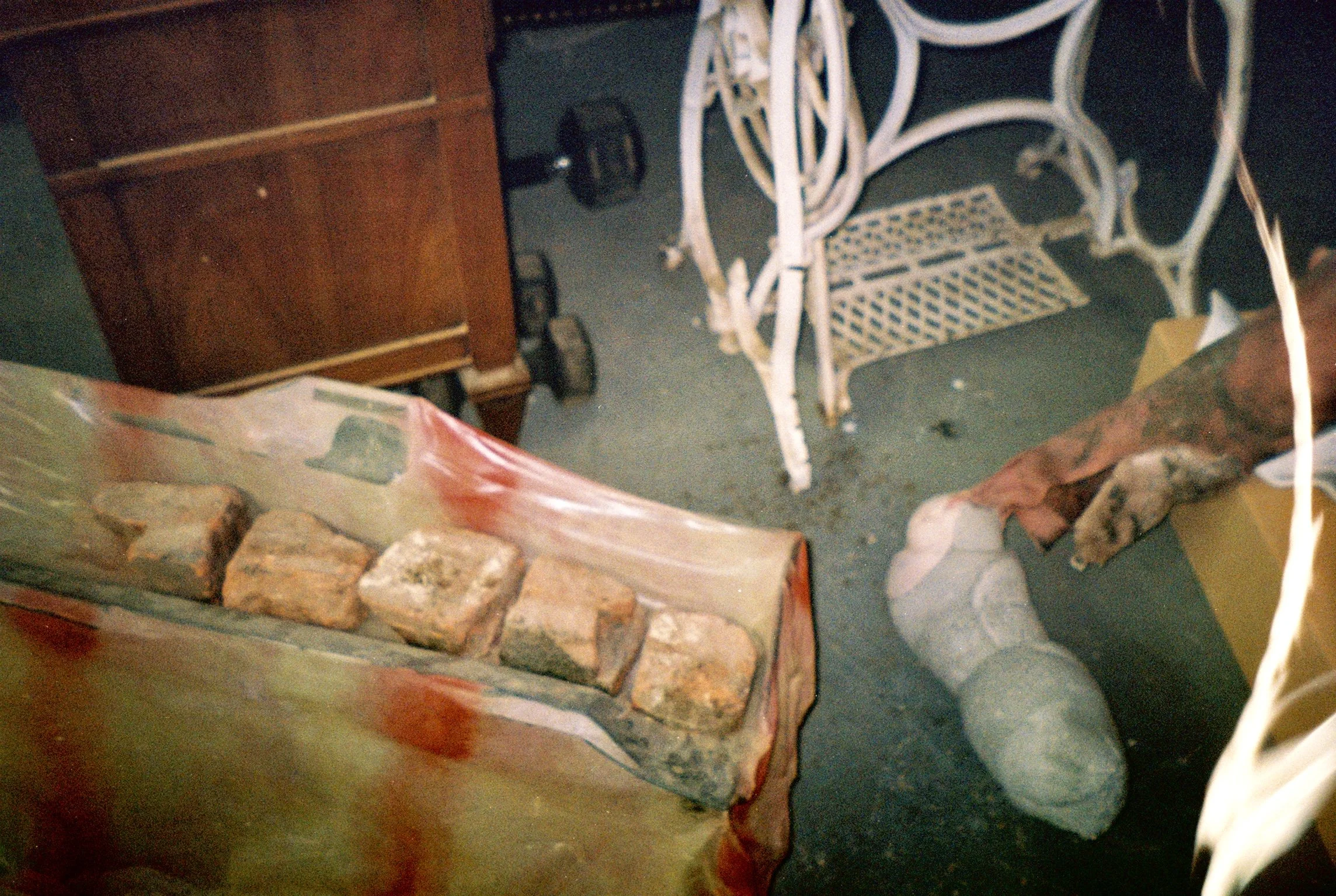
OUYANG: I got a Festool system this year. I got a track saw, finally. Sometimes I joke that measuring is for people who have never known love. I eyeball everything, and I am pretty good at it. So it’s impressive that things sort of almost fit together. But ultimately I do need to be able to cut straight lines.
🦓: So until recently, the majority of your sculptures were freehanded?
OUYANG: I do things through sheer force of will, and a lot of the work until 2022 was cobbled together through that will. To this day, every time I begin putting together a sculpture, it feels like the first time I’ve ever made a sculpture, dealing with gravity and trying to figure out how to stick two incompatible materials together.
🦓: What do you classify as incompatible?
OUYANG: I just started using hardware at the end of 2023. The “exposed joint” is relatively new in the work. I used to hold everything together with plaster, epoxy, maybe a few dowels, and a prayer.
🦓: The suspension is such a beautiful and integral part of the work. Do you find it worth it?
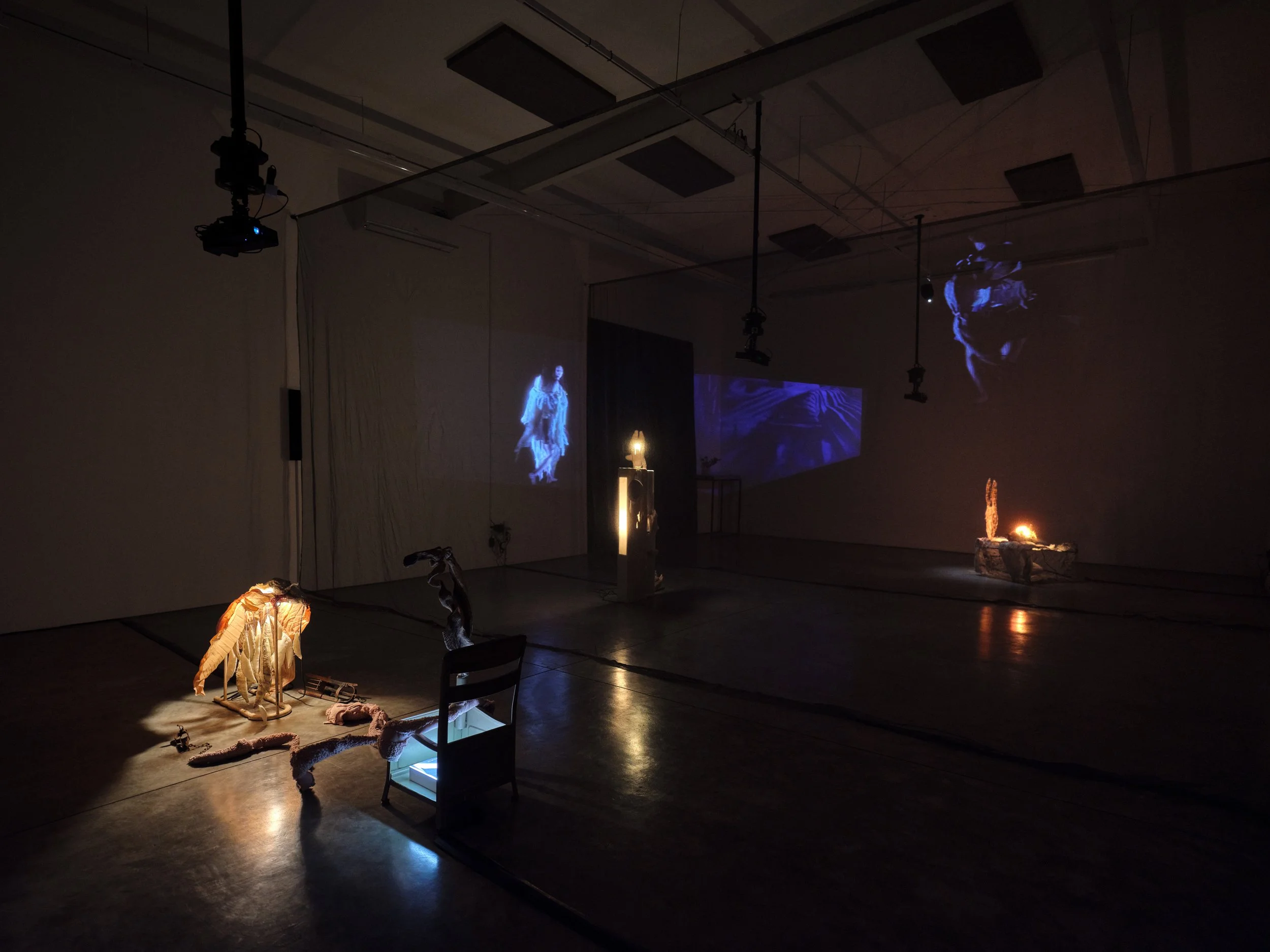
OUYANG: I had this thing about hanging art from the ceiling that I really resisted for a long time. I thought, “Hanging is for people who are too lazy to figure out how to build a structure to get the thing off the ground.” But I’m trying to be less needlessly dogmatic.
🦓: Laws of physics will do that to you!
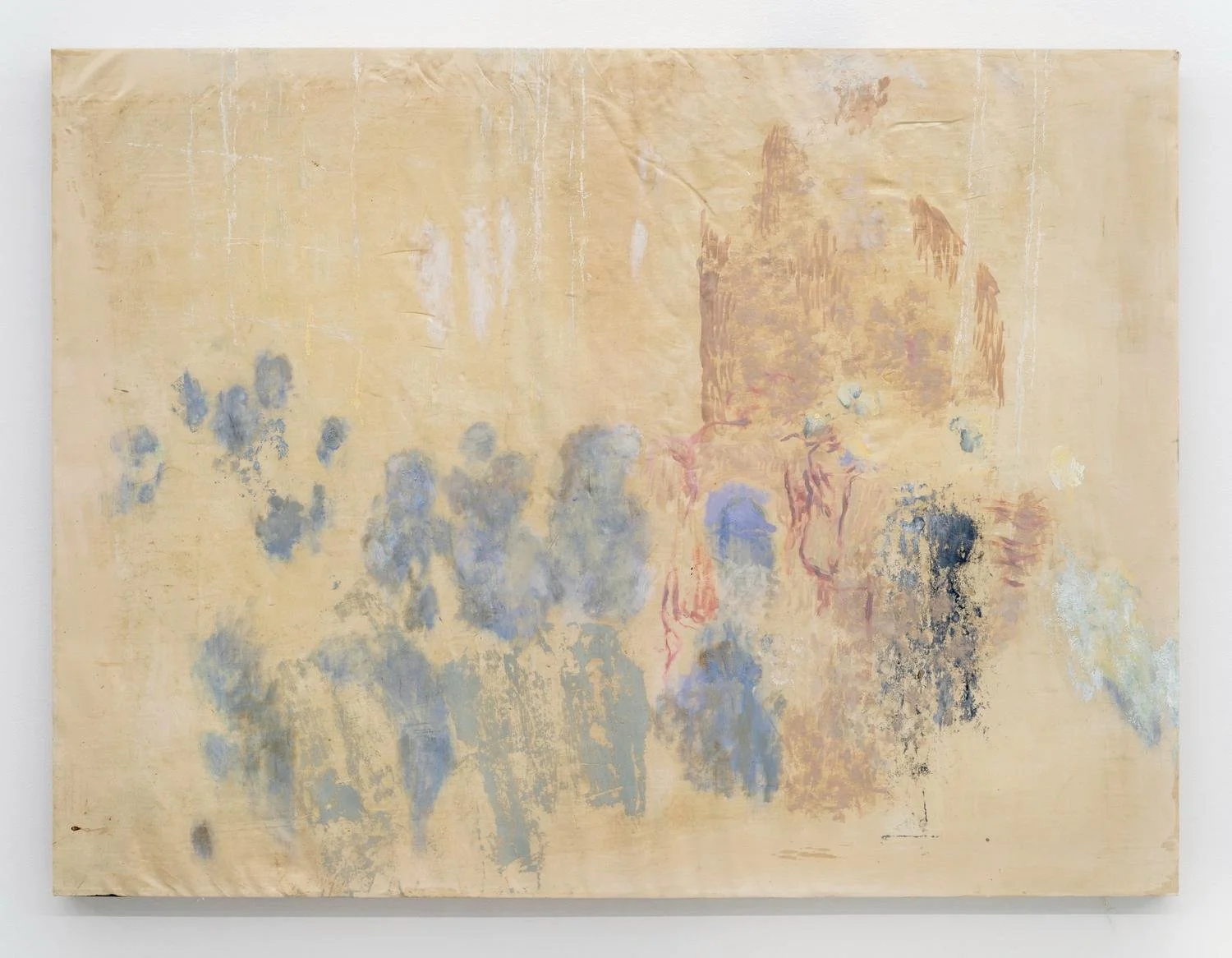
OUYANG: Speaking of humbling, I made a painting show… The show that I did last December in Columbus, that was all new paintings. After I finished making Trick, my last big show at Lyles & King, I took off for Spain. I spent a month walking the Camino de Santiago, this historic Catholic pilgrimage. It was a 500 mile hike, and it was probably not the hardest of hikes. But for somebody like me, who had never done anything like that in my life, it was really fucking hard.
🦓: Both physically and mentally, I assume?
OUYANG: It was humbling, and it really changed my relationship to the slow, flawed, weak machine of my body as it hobbled along embarrassingly and in pain day after day. I was bad at moving my body across this landscape. Because we were walking the whole time, the way the landscape changed was so slow and incremental, which affected my relation to looking and time and flatness. When I came back from that journey, I had a fractured foot, and all this skin on my right arm had blistered and peeled off from an allergic reaction to bed bug bites. It was like a Cronenberg movie. After that journey, I physically couldn't make sculpture. I didn’t want to deal with gravity or project management. So I worked on these paintings. I’ve also been trying to let the practice follow or give in to the demands of living.
🦓: That’s funny, though, it goes back to the body punishment you were talking about—like, “I haven’t done this since I was a kid, let me go walk 500 miles.” Was it rewarding? I feel like an experience like that puts you back in your body really intensely.
OUYANG: There is a certain type of person that does a thing like that and feels changed by it. It’s the tech worker who is between jobs doing it as an Eat Pray Love thing, they’re the new-agey and self righteous ones. I prefer the hard-boiled Catholics who are doing it for God. They’re not preaching to you, they’re Walking.
🦓: What were you thinking about through this pilgrimage?
OUYANG: Anne Carson has this essay, Kinds of Water, which is her account of walking the Camino. I read it ten years ago, and that text has taught me so much about creating, about art-making, about translating the textures of living and desire and heartache into making work. About two years ago, an ex-lover of mine told me his mother did the pilgrimage, which made me realize this is something a person can actually do, not just evoke as a creative abstraction.
🦓: The realization that you could just go.
OUYANG: So I went. And it overall was a bad experience, but I am very glad I did it. That’s how I feel about many cardinal experiences in my life. Did I like it? Was it fun? Was it even rewarding? No…But I had to do it.
🦓: What was the subject matter of the paintings after?
OUYANG: I began the pilgrimage on June 2nd, and the first night we slept in this renovated monastery. We had crossed the Pyrenees that day, and I was dead tired. But somehow, I couldn’t sleep, I felt so electrified. So I was scrolling on my phone and learned that it was International Whores’ Day. And I did not know until that night that International Whores’ Day celebrates an event in 1975 where the sex workers in Lyon, France, stormed the Church of Saint Nizier and occupied it for a little over a week, to protest for their rights and against police harassment. These hookers had slept in a church starting the very same day that I, then still an active hooker, was sleeping in this monastery on this pilgrimage. It felt like this really charged confluence of history and identification.
So with the paintings that I started afterwards, I took screenshots of news footage of that occupation in Lyon. I began these abstracted compositions based on these images of sex workers congregating in this space of worship. I layered and scrubbed out the images, disintegrated and reformed them using different techniques with acrylic and oil paint, as well as more unconventional materials like wood glue and shellac. That show was titled Afterimage, which is one of the more prosaic and less punchy show titles I’ve made, but I was in a very gentle headspace.
🦓: I get it. It sounds like a very sweet thing, and also rather divinely timed. Is there religious influence in your work?

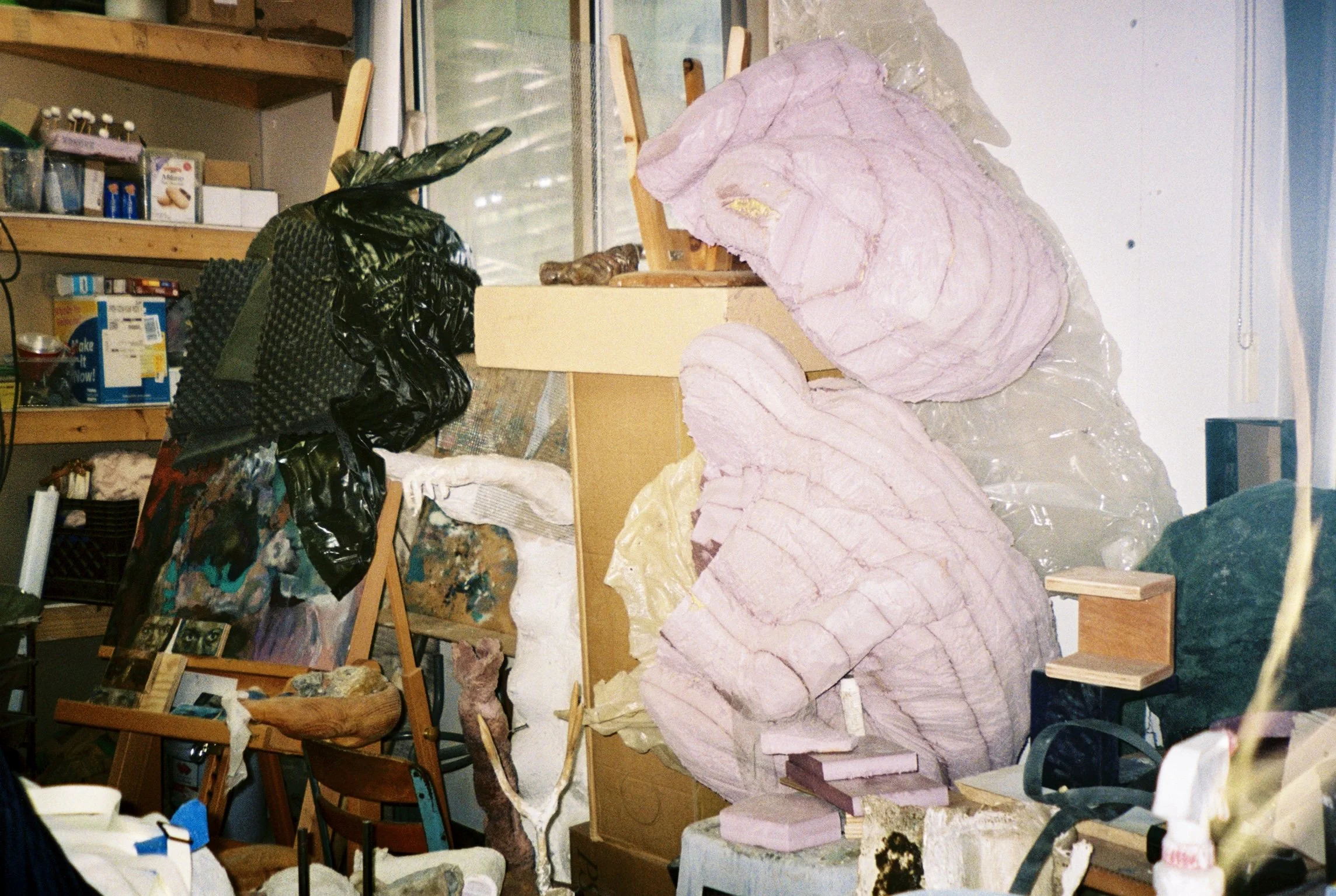
🦓: OUYANG: Since 2016, I’ve been evoking the material expressions of faith. Particularly in Catholicism, because it is so Pagan and embodied and sensual. It probably started with the influence of Anne Carson, who is charmingly and unapologetically Catholic. I found that so refreshing, her embrace of faith without shame in a time when secularism is more fashionable. I didn't grow up religious, but there's something about strong desire, fear, and putting your trust and future in a thing you can neither see nor apprehend, that’s a lot like putting your faith in art.
🦓: It’s a leap of blind faith.
OUYANG: Whenever I am feeling uninspired, I look at reliquaries and votive sculptures from different religious expressions. I grew up visiting my grandparents in China, and the thing you do there on a weekend is hike up the mountain to the temple and look at all the icons. Temple sculpture and church sculpture is scaled so imposingly, there’s this relationship to verticality.
🦓: Awe-inducing?
OUYANG: Yes, and there’s this kind of tenderness, this love and labor, in their painted or worn surfaces. I like that they are sincere objects, because I am only interested in making sincere objects. To make a thing for God is as sincere as you can get.
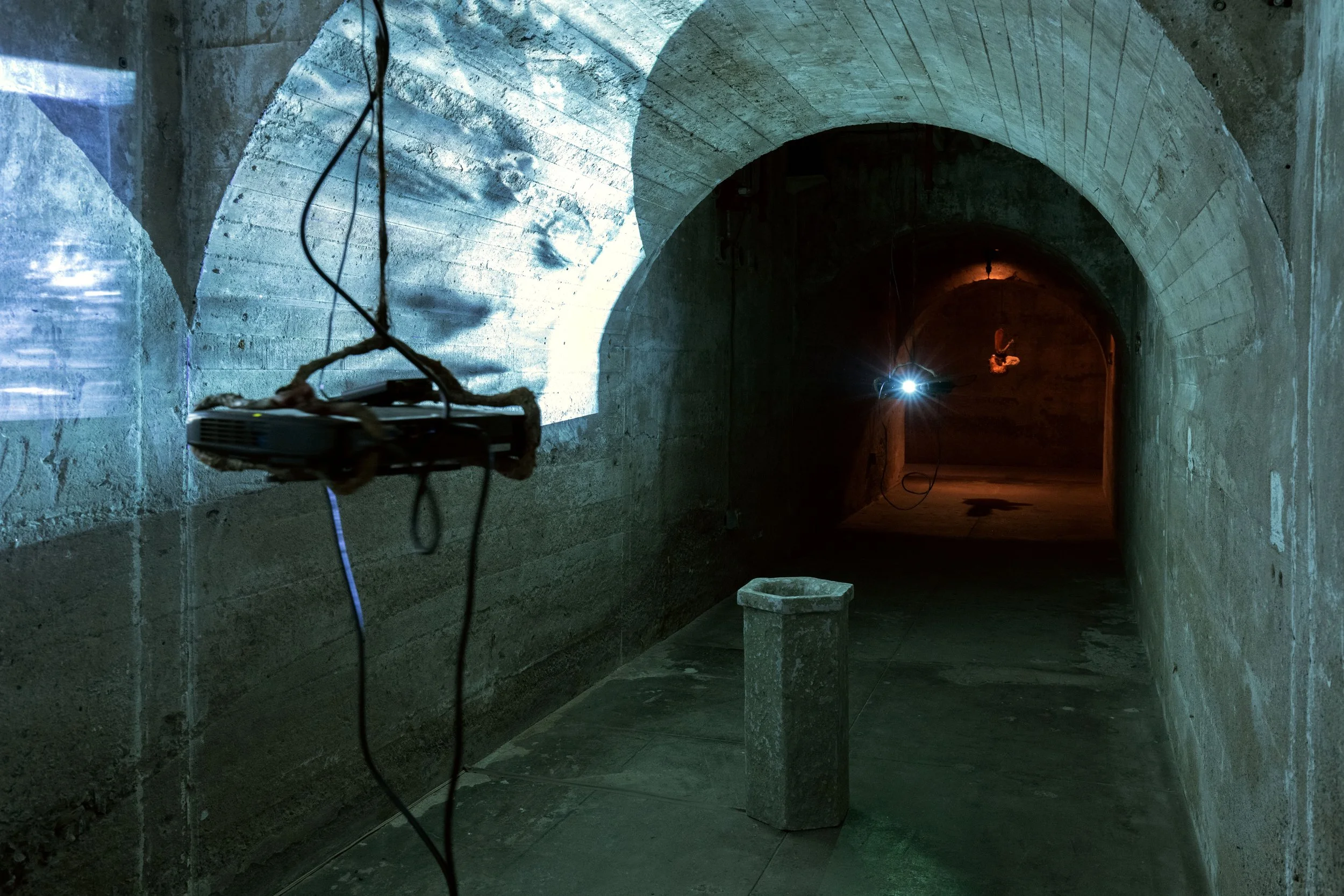

Cato Ouyang (b. 1993, Chicago, Illinois)
cato-ouyang.org / @kittytuna
Cato Ouyang is a New-York based artist whose multi-disciplinary practice considers the unstable affinities between materiality and memory. Through a dense amalgamation of references and mediums, Ouyang’s works reflect on encounters between historical precedent and the built environment.
Ouyang has had solo exhibitions at Night Gallery (Los Angeles), No Place Gallery (Columbus, OH), Lyles & King (New York), the Knockdown Center (Queens, NY), and Make Room (Los Angeles). Their work has been included in group exhibitions at the Cantor Arts Center (Stanford, CA), the Institute of Contemporary Art at MECA&D (Portland, ME), the Aldrich Contemporary Art Museum (Ridgefield, CT), Capsule (Venice, IT), Galerie Kandlhofer (Vienna, AT), and more, with upcoming exhibitions at the New Museum (New York) and Museum of Fine Arts Boston.
Ouyang’s work has been featured in publications such as The New York Times, Artforum, Flash Art, Momus, Sculpture Magazine, Document Journal, Art Review, and Frieze. Their work is held in the permanent collections of the Los Angeles County Museum of Art, Museum of Fine Arts Boston, Brooklyn Museum, High Museum (Atlanta, GA), Pérez Art Museum Miami, Nasher Sculpture Center (Dallas, TX), Columbus Museum of Art, Cantor Arts Center (Stanford, CA), Kadist Foundation (San Francisco), Faurschou Foundation (Copenhagen), and Pond Society (Shanghai). Ouyang holds an MFA from Yale University.
