
PAOLA OXOA
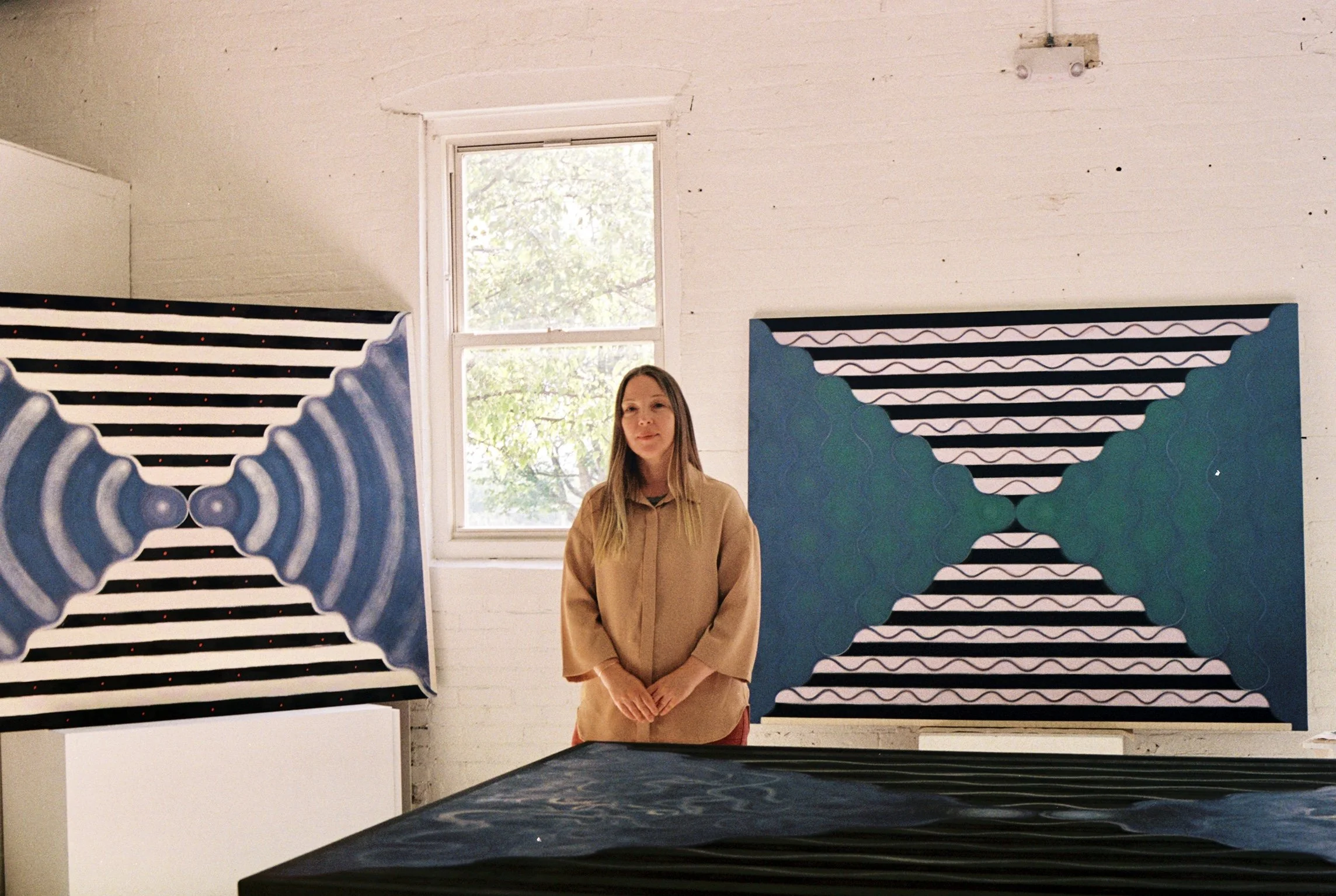
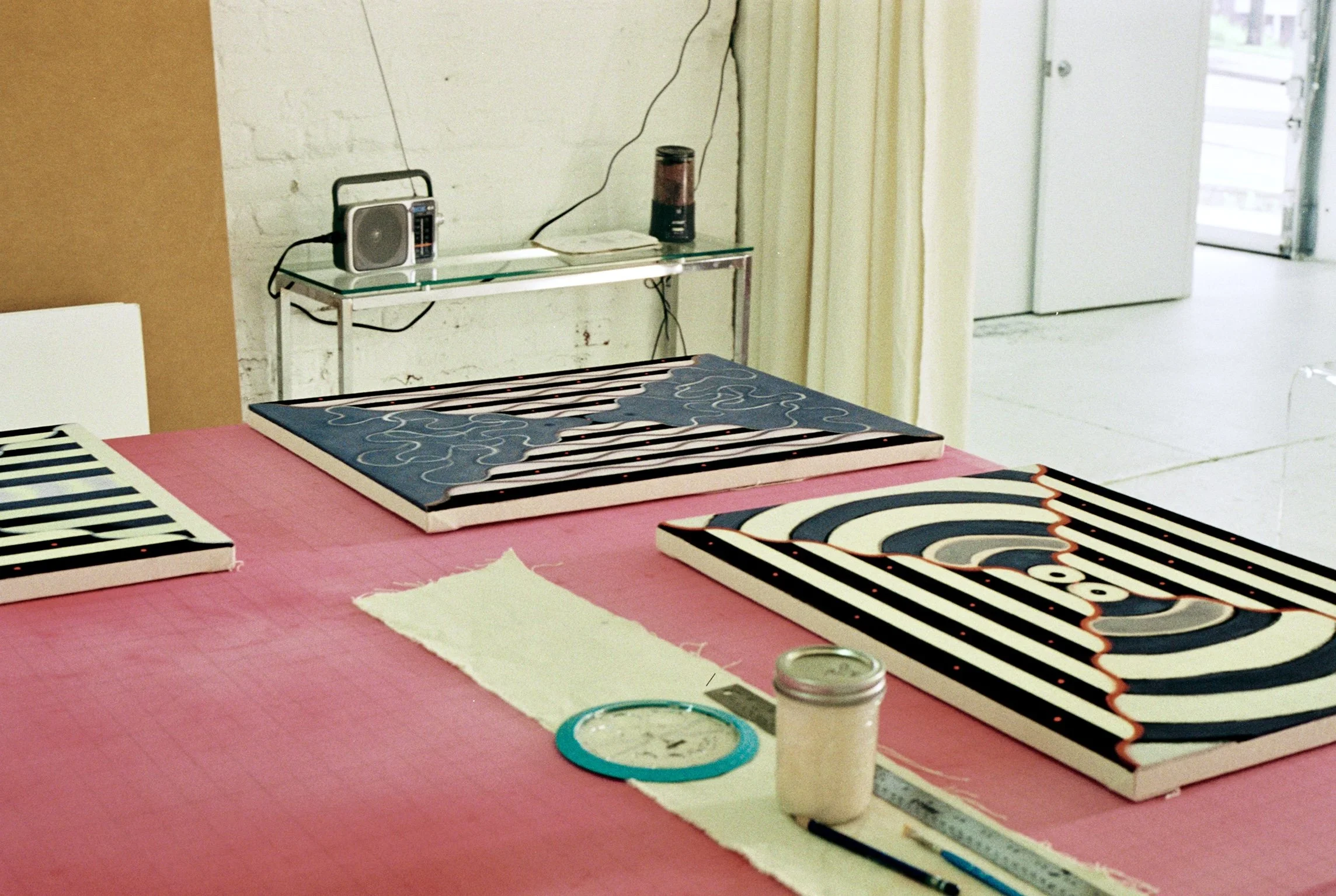
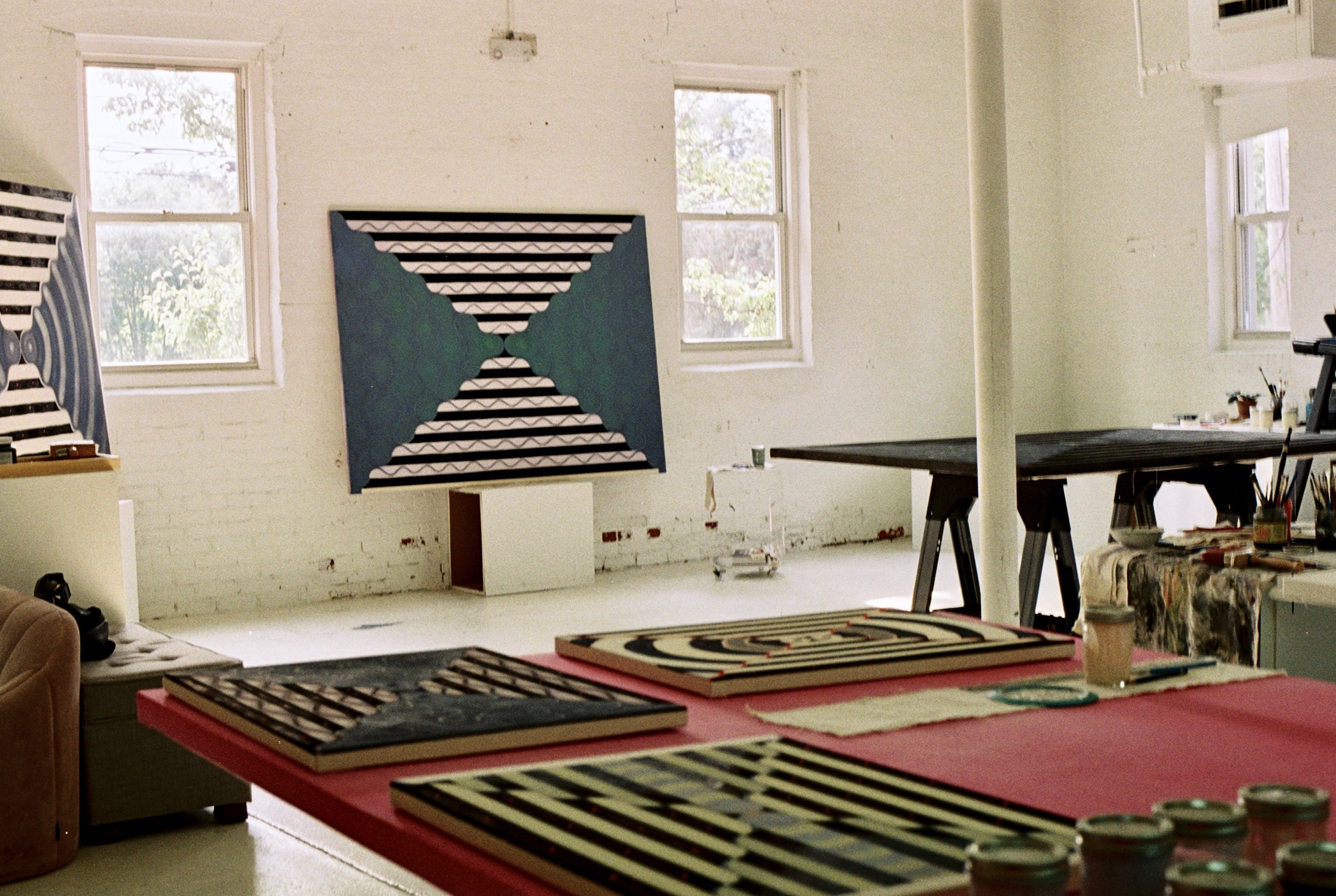
Oxoa with works in progress
ZEBRA PRINT: Hi, Paola!
PAOLA OXOA: Hi, how are you? Welcome, thank you for coming to Beacon.
🦓: Absolutely. This space used to be Mother Gallery, right?
OXOA: That's right.
🦓: Tell me about your return to painting, and the discovery of this new body of work. How did it come to you?
OXOA: It’s not so much a return but rather a very slow progression from drawing to painting. I entered the art scene as a video artist back in 2004 with a solo exhibition at the MCA/Denver, then I moved to NYC to work for Apple. Working in tech full time made me want to use analog materials in the studio. So I started making small ink and gouache drawings on mylar around 2006. Each year the drawings got larger and more painterly. Then in 2013 I had an experience which sparked an idea, but it took me about ten years to embody this idea and align my life to be able to produce it. I made drawings in my attic studio during that time that seemed out of left field next to my other body of work. It took me a while to see the continuity.
🦓: Did the first paintings stem from these drawings you made in your attic? Do they serve as studies for you?
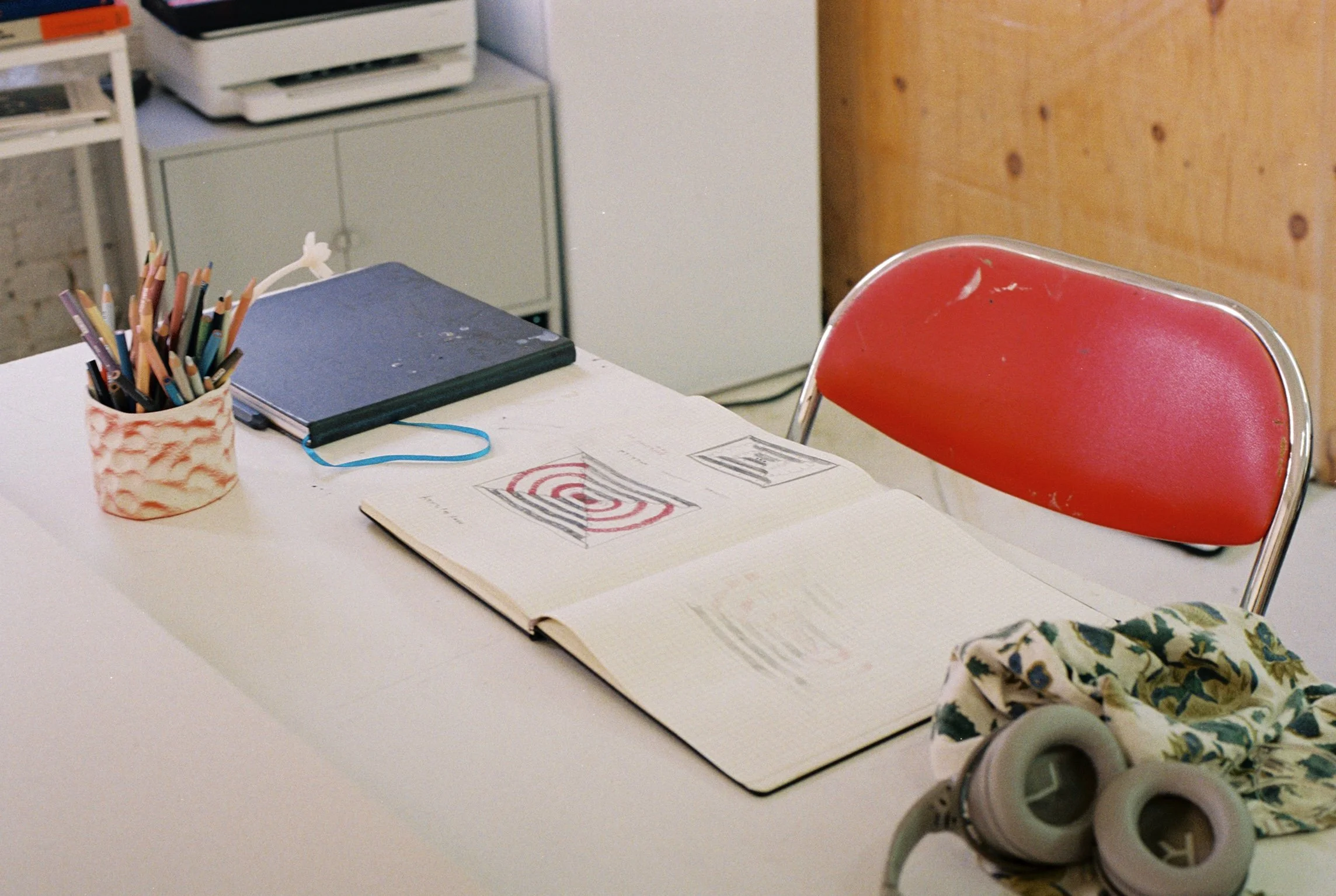
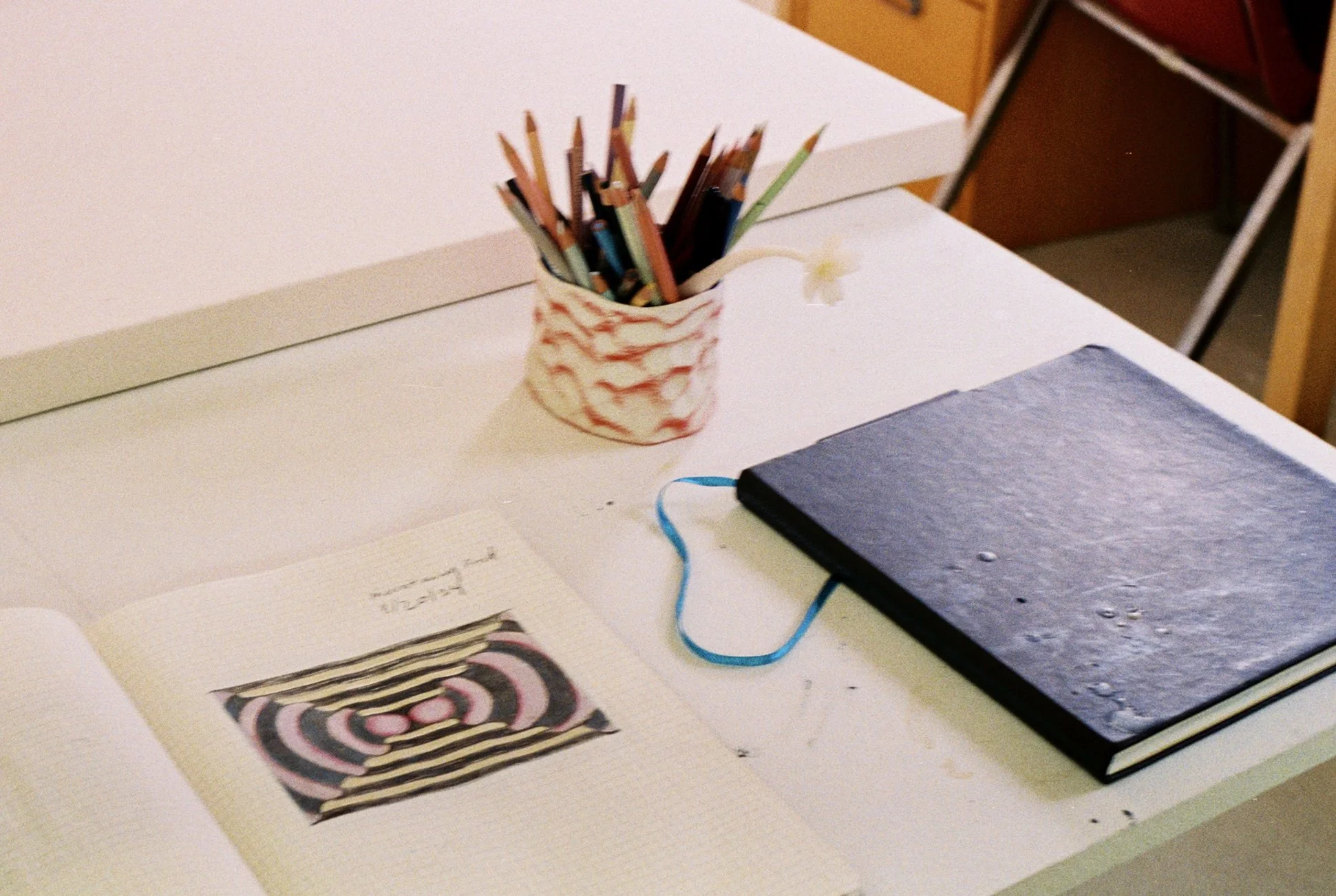
OXOA: Yes, the first paintings came from the attic drawings. Now I create these drawings often in my sketchbook, they’re not necessarily studies, because they’re energetically unique, each is responsive to the environment that I’m in. But then I’ll select them, yes, to inspire the start of a painting. As you can see, some of these represent internal states, while some correlate with specific dates and times; in a way, these become cultural and political reflections for me as well.
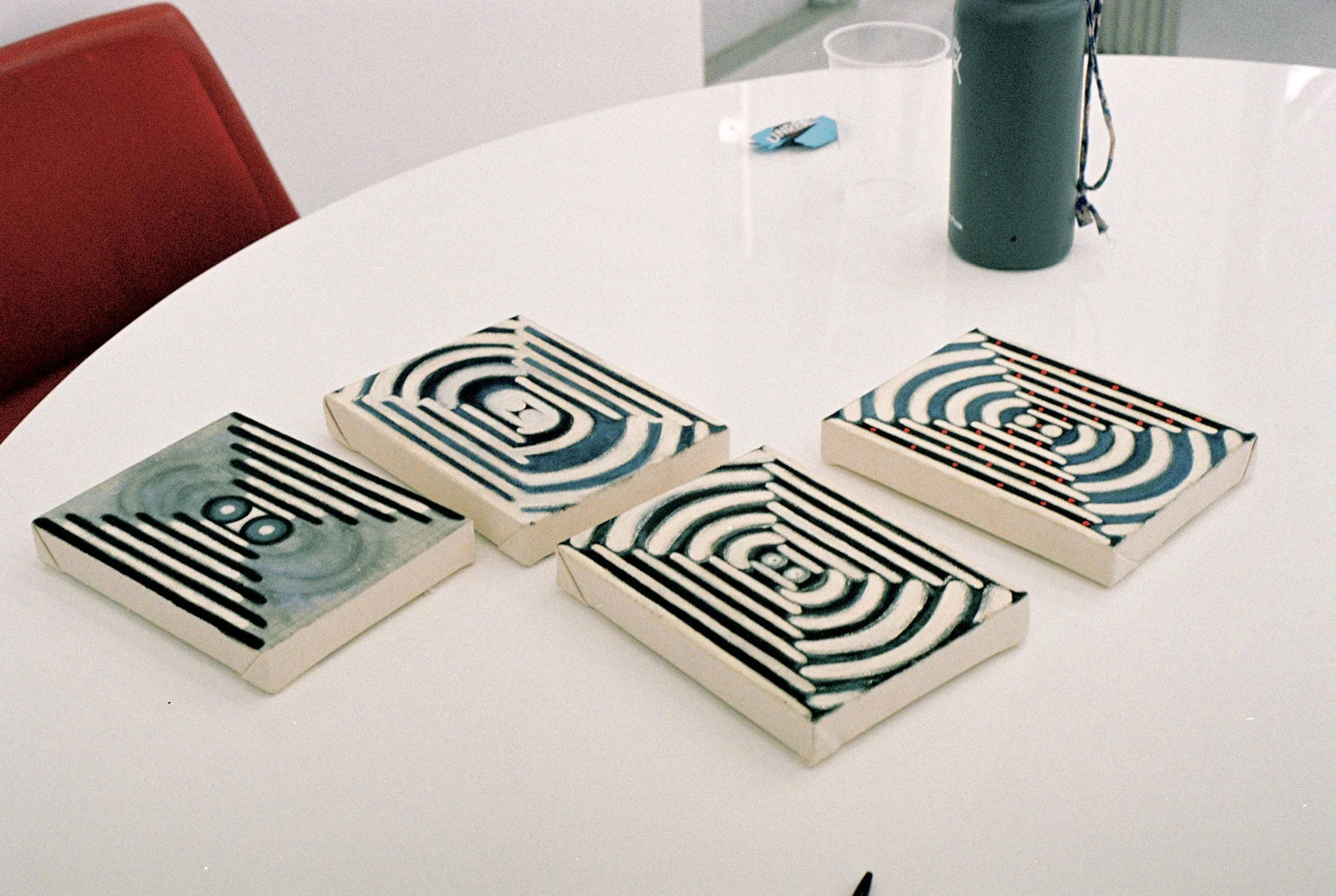
Left to right: Pressure, 2023; Palindrome, 2023; Humor, 2023; Attention, 2023
OXOA: Grace is the first large painting I made in this series, and these four small ones are the first actual paintings on canvas with this form. Attention being the very first one.
🦓: There’s a visible grid in the outermost frames of your paintings, seemingly leftover baselines in what looks like pencil or graphite. Can you tell us about your grid, assuming it’s the system with which you start?
OXOA: I've always loved the grid. When I was a kid in school in Colombia, we used these grid-lined notebooks for math, and I’ve always kept a gridded sketchbook. I still do, right here. I went to a magnet high school in Miami for architecture later on, and the grid is the foundational basis of everything you learn as a drafting student, like one-point perspective and so on. Then I went to college for animation and my workspace was often the 3D grid.
🦓: Those were your first encounters.
OXOA: Exactly. And then I learned about the significance of the grid via art history, and later through the work of artists like Sol LeWitt, the Systems art movement, all of which are important to my practice. I didn’t set out to use the grid but one day it just made sense to use it as a tool and sometimes it feels right to expose it in the work. You know, it’s masculine, it's rigid, it's something I've also fought against. I didn't want to make work that felt cold. But then I realized while making this body of work, that there is another grid, and it's not squared, it’s a cross wave! It's fluid. I don't think it’s about understanding it all and graphing the universe, but I think of myself as a vessel through which I can transmit energy onto a ground, which is a way to communicate.
🦓: Is that what you’re trying to do? To visualize the systems of the world that flow through you, you're putting it into pictures?
OXOA: I don’t see the paintings as pictures, as much as I feel them as sound or know them as poems. It's all just coming through me. I will say, I do have rules. I don't like starting an artwork with a blank canvas, unsure of what to do next. I need to tap into a zone and I start by making a grid with pencil, this process allows me to focus my attention. I’ve discovered a form that allows for communication, it’s very simple, two lines cross over the grid. Where the grid lines meet the cross lines is where I base markers for the waves that follow. Ironically, it frees me: the grid allows me to paint without having to use tape or tools other than a brush.
🦓: So you use the grid to come to this “singular form” that you’ve described, like a starting point for each of your paintings. Can you tell us more about that?
OXOA: The form struck me when I was traveling on a dugout canoe years ago. It started as a visual translation of the energetic relationship between my body and the environment. The two circles appeared much later and shocked me. I’d once heard humans are especially attuned to finding eyes.
🦓: Interesting. We’re naturally inclined to them?
OXOA: Apparently. The circles emerged after a decade of working with the geometry of the form, and when they did, I thought of two very different paintings, Jasper Johns’ Painting with Two Balls and Francesco del Cossa’s Saint Lucy.
🦓: It must be the eyes. There’s something confrontational about a work of art looking back at you.
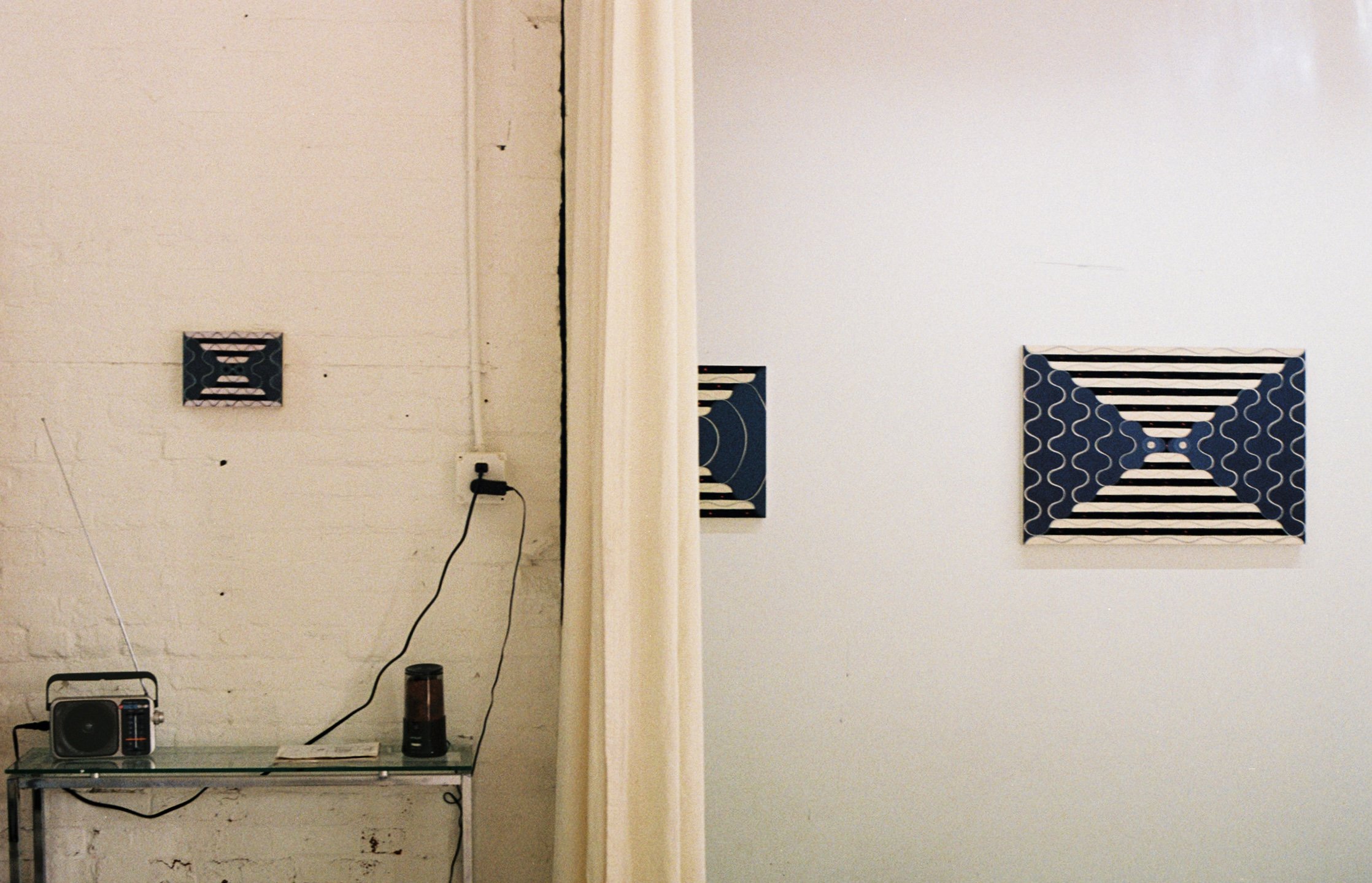
Left to right: Amble, 2024, Glimmer, 2025, Gaze, 2025
OXOA: Right, unsettling but also kind of funny. I thought about those two paintings at that moment in time, thinking, “What is this?” And I made the first drawing with the two circles, had it in my studio in my attic, just staring back at me for years. I almost fought it, I would try to make other paintings.
🦓: What held you back?
OXOA: It just seemed so strange, you know? I kept thinking about these two circles, what they could represent…
🦓: What do they represent? When I think about your work, I do think about signals. There’s an emission, or maybe a transmission of something there. Are these about sharing at all? Sharing knowledge, or warmth, or things you can’t put into words?
OXOA: I'm glad to hear you’re feeling this warmth transmission, as you’ve called it. I like to think about pre- and post-verbal states. And I imagine these varying ways of communicating, at some point a human had to share something and they drew it on a rock, maybe with a stick. I’ve imagined the shift between these two periods.
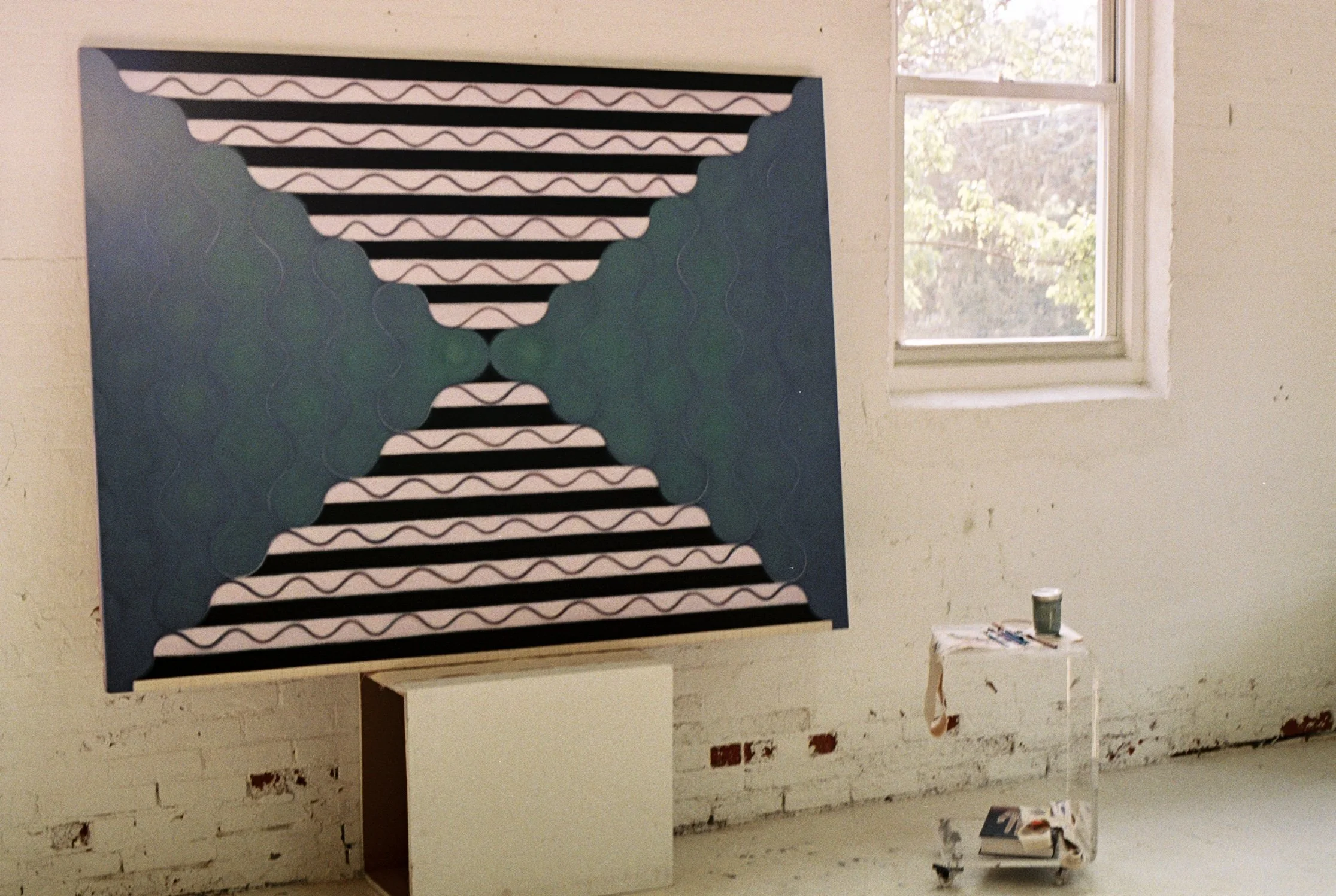
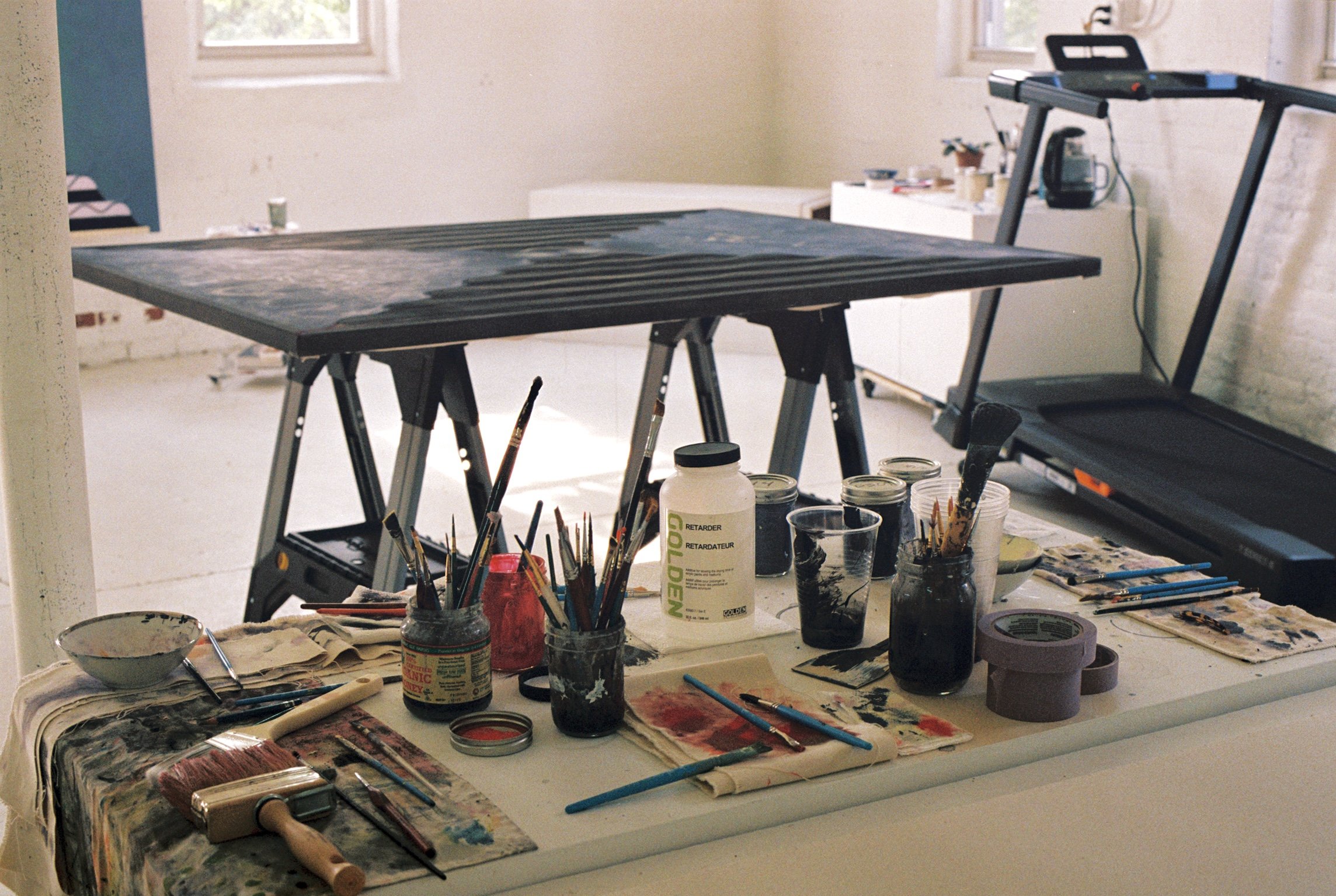
Work in progress

Oxoa at work
🦓: English is not your first language, and you’ve shared that much of your earlier life was shaped by this. You’re touching on the idea of translation here, or a visual language of its own.
OXOA: That’s partially why I kept making these in my attic for a while. I didn’t want the work to be misunderstood or rather I wanted to understand the work or believe in it.
🦓: Let’s get into you. Perhaps a generic question, but what has influenced you?
OXOA: I’ve been looking at painting closely to prepare for this body of work. Several major influences that come to mind are Milton Avery, Miró, Brice Marden, Cy Twombly, Pat Steir, Kenneth Noland, Philip Guston, Robert Ryman, Mary Heilmann, Monet, specifically his Seine River paintings. I’ve been looking at Mark Rothko and Agnes Martin a fair bit. I was talking to a friend recently, and I told her that I look at Martin and feel like she painted to stay above the waterline. I look at Rothko and think he painted to go below it.
🦓: And you?
OXOA: I like to think that I’m exploring both. Although my goal is to remain grounded. I’m interested, as I sort of spoke about before, in tapping into this unifying space where my body and the environment start to feel like one thing.
🦓: Right, like consciousness. Is there a relationship between spirituality and your paintings?
OXOA: I feel like my body is a vessel for energy. If you take a closer look at these, sometimes the marks I make are scratchy, sometimes they’re tight. I don’t go back and change them. It just is.
🦓: Like a prism. You absorb your environment, but you reflect how you see it before translating it out.
OXOA: Right. A lot of the colors that I work with come from observing light in nature.
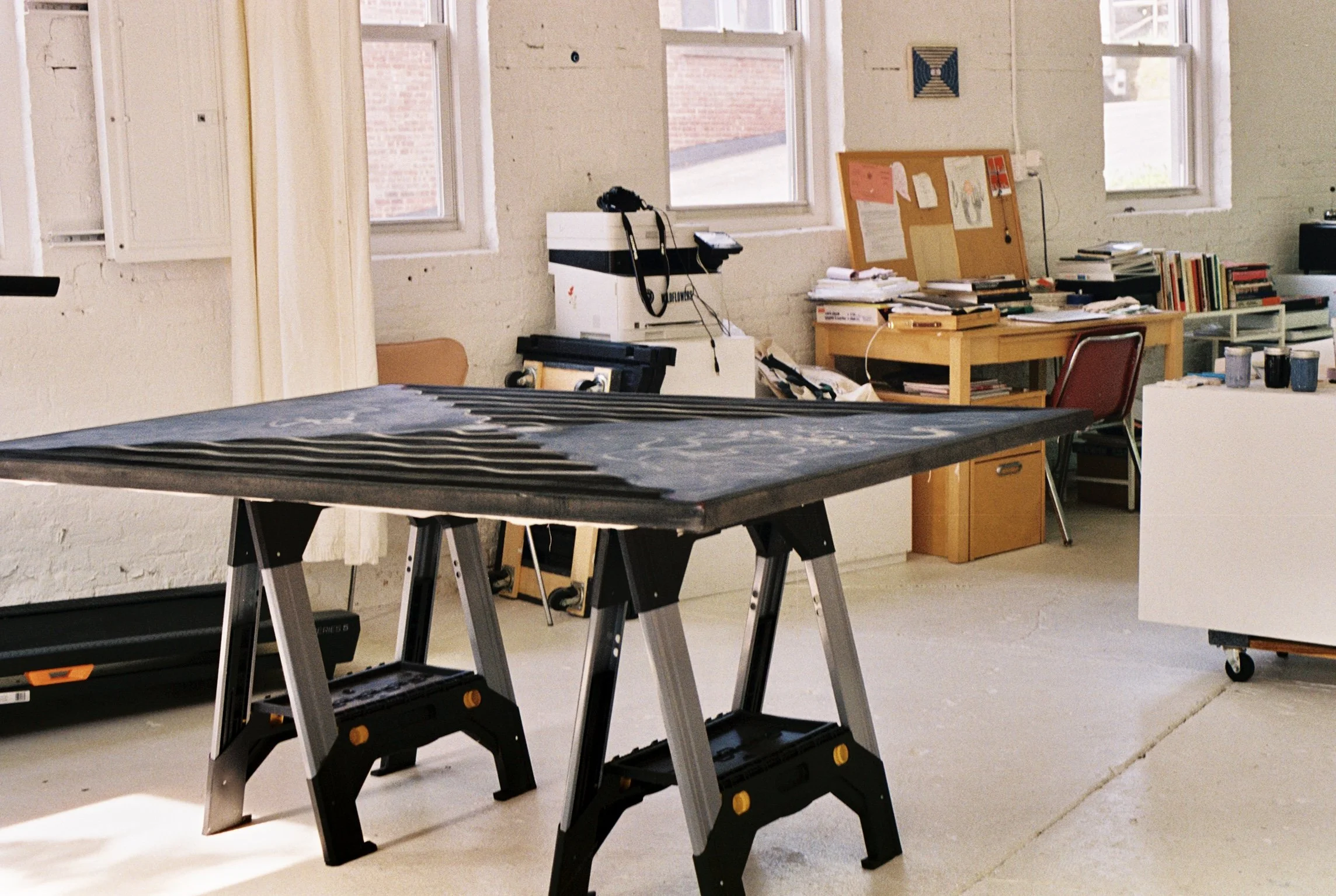
Oxoa’s studio
🦓: We’ve touched on this a little, but could you share more about the relationship between the environment and your work?
OXOA: My work is interconnected with the environments I inhabit, whether natural, technological, or social. I’ve been influenced by the Land art movement, especially the work of Agnes Denes, Nancy Holt, and Michelle Stuart; as well as by Alan Saret, whom I consider a mentor. Over time, I’ve come to see both nature and environment as fluid, energetic, and full of information. That includes not only landscapes and plants, but also my own body, and even the systems we build. My early video works were made in collaboration with living plants, I would ask them questions and film them in timelapse to observe their responses. That way of listening shaped how I understand perception. While my work remains informed by my sensory experience of nature, I also recognize that our environments, all of them, are shaped by forces that are difficult to comprehend and to feel. There’s awe in that, and also a kind of pain.
🦓: It’s its own language, too.
OXOA: Yeah. Sometimes it’s hard to find the words.
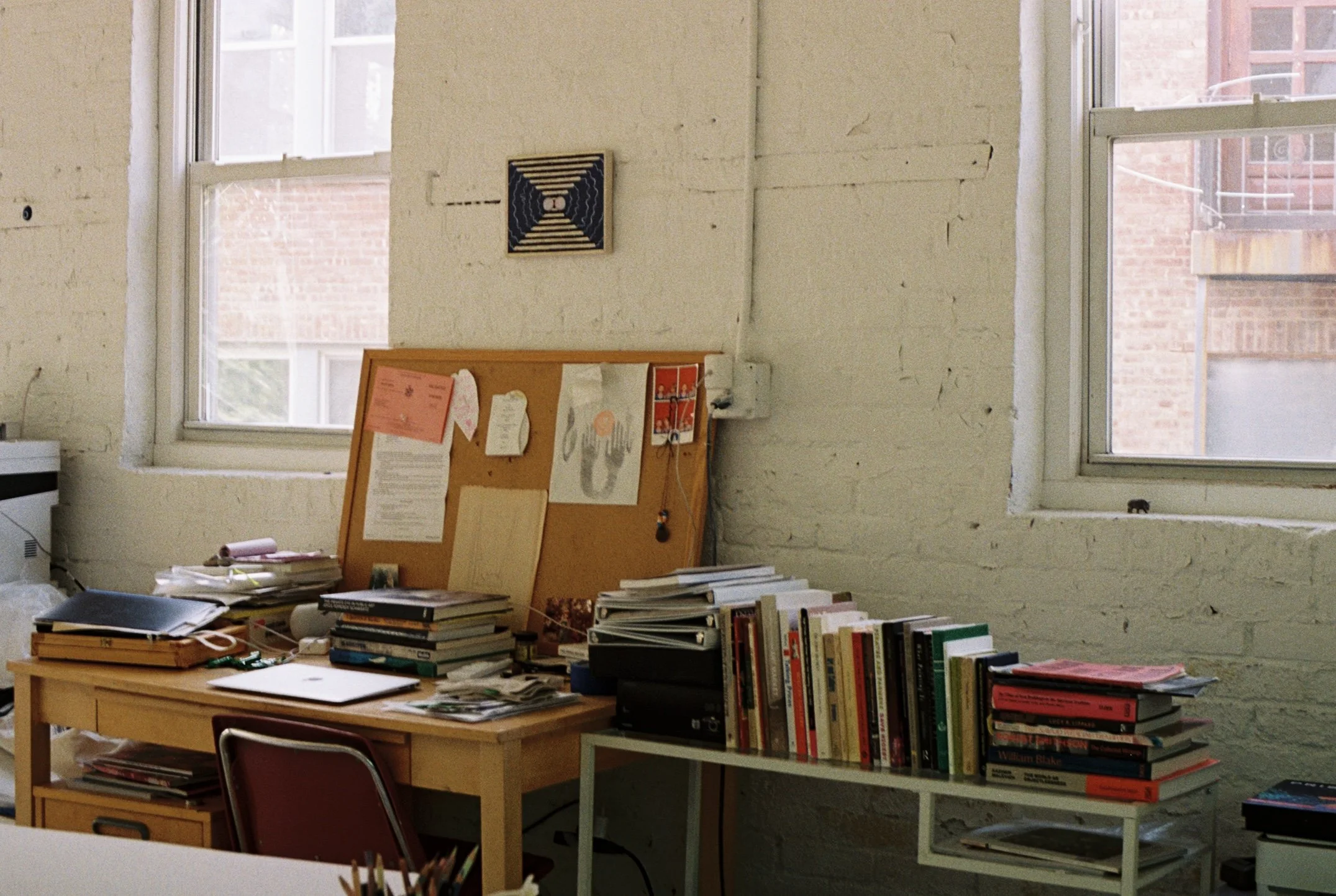
🦓: You make these drawings first, in your sketchbook, as very intentional practice. Often, you mentioned. Once they translate to paintings and they’re finished, do you feel completion? Maybe fulfilment is a better word, or a weird sort of self-actualization on the sketches’ behalf. Does the work change to you once it changes forms?
OXOA: When these are finally finished, I can feel them in my body. I feel the work humming. When I initially had these visions, I guess they weren’t…
🦓: They were there, but they weren’t fully formed?
OXOA: I think I feared not being able to make them how I perceived them in my mind. I do feel satisfaction when they seem to come together.
🦓: The words we’re using are veering on psychological. The symmetry in these remind me of Rorschach tests, but infinitely less morbid.
OXOA: Everything is psychological, we cannot avoid that. Nature encompasses that as well. When I look at art, I wonder about its purpose, specifically why an artist would create their work.
🦓: Is there an answer to that for you? Is it a secret?
OXOA: Oh, there’s so many questions and no answer. I will give you a word that I feel is important to these paintings, though, which is “integration.” Something is coming together for me here, but maybe we cannot know what.
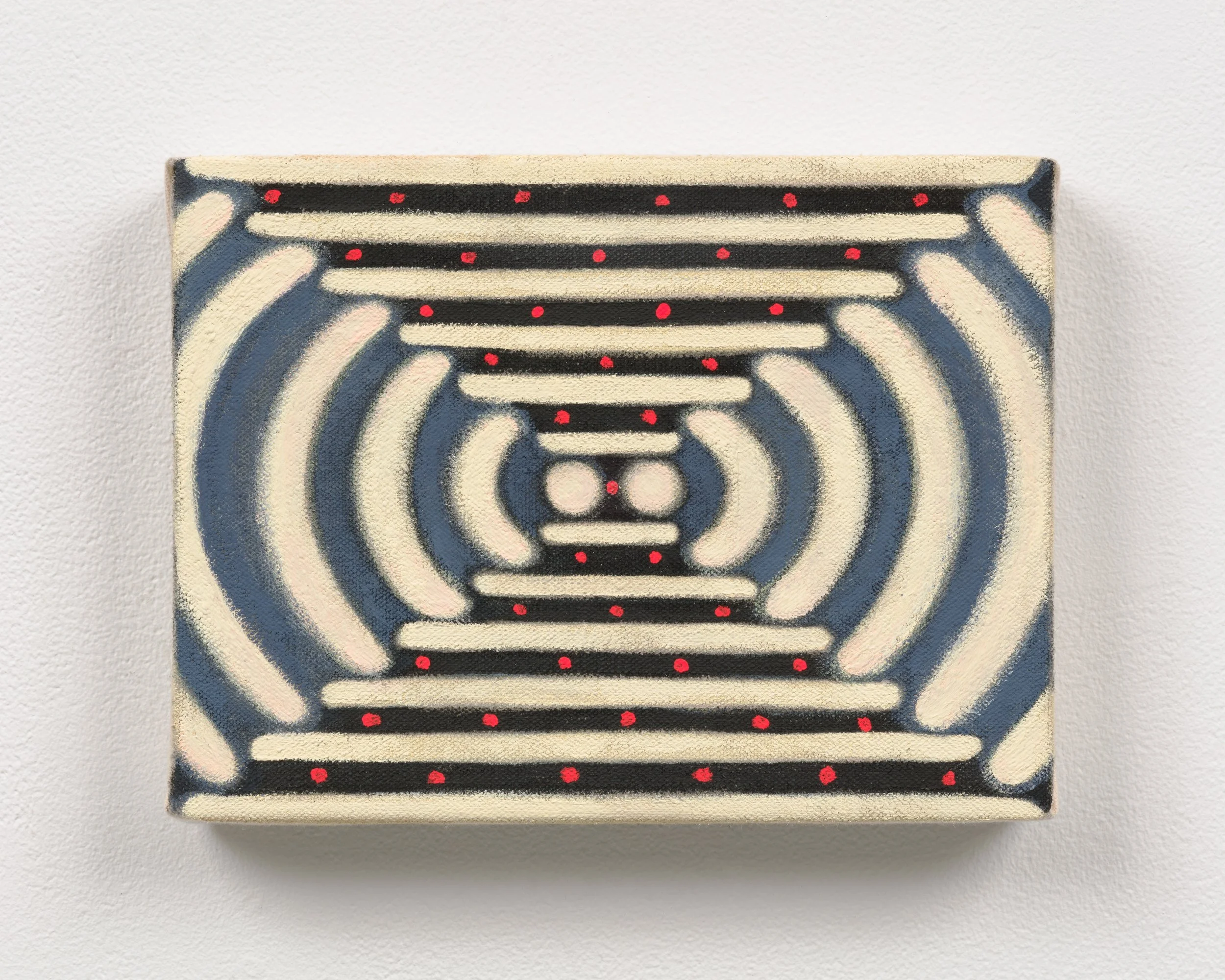
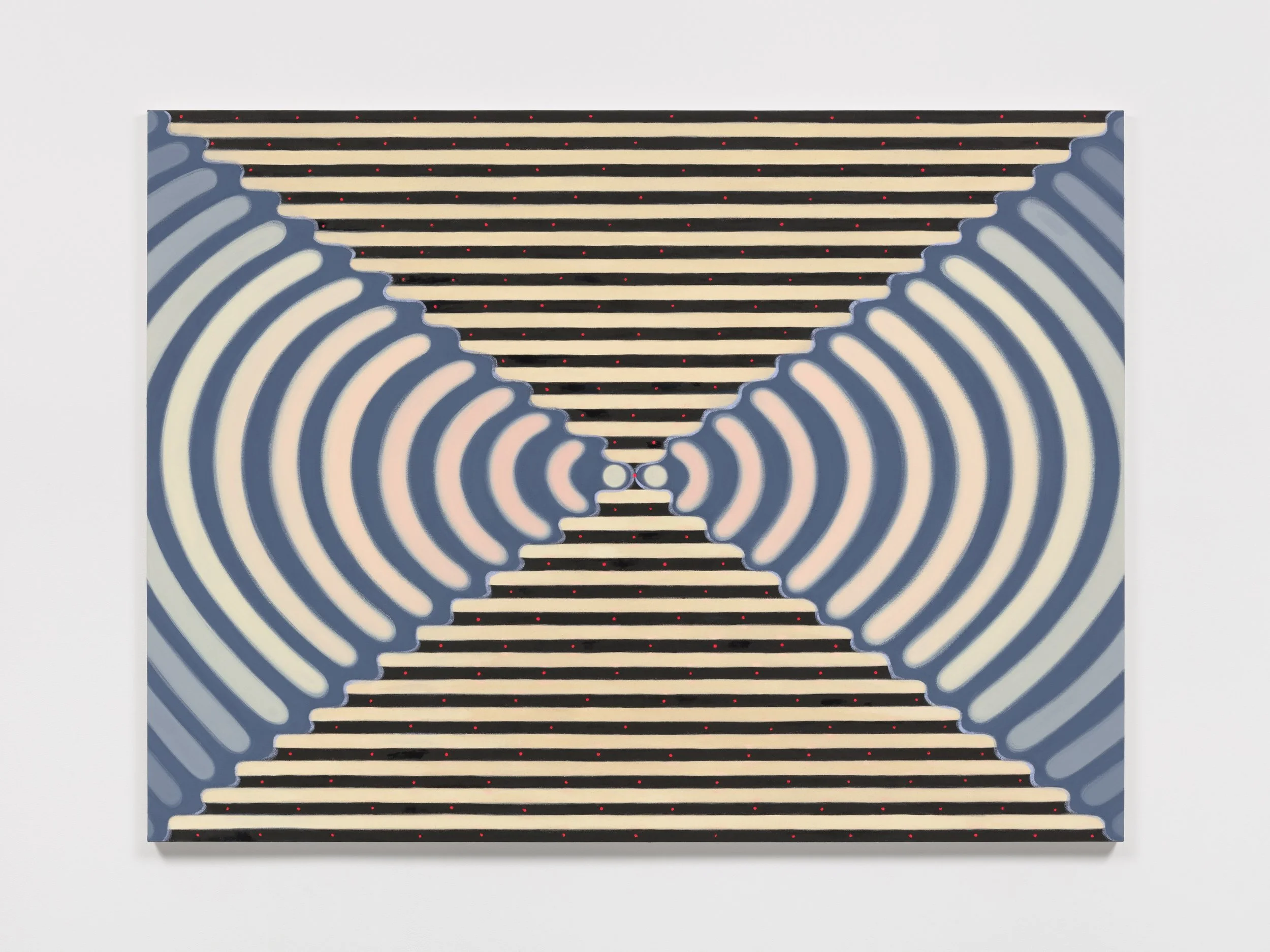

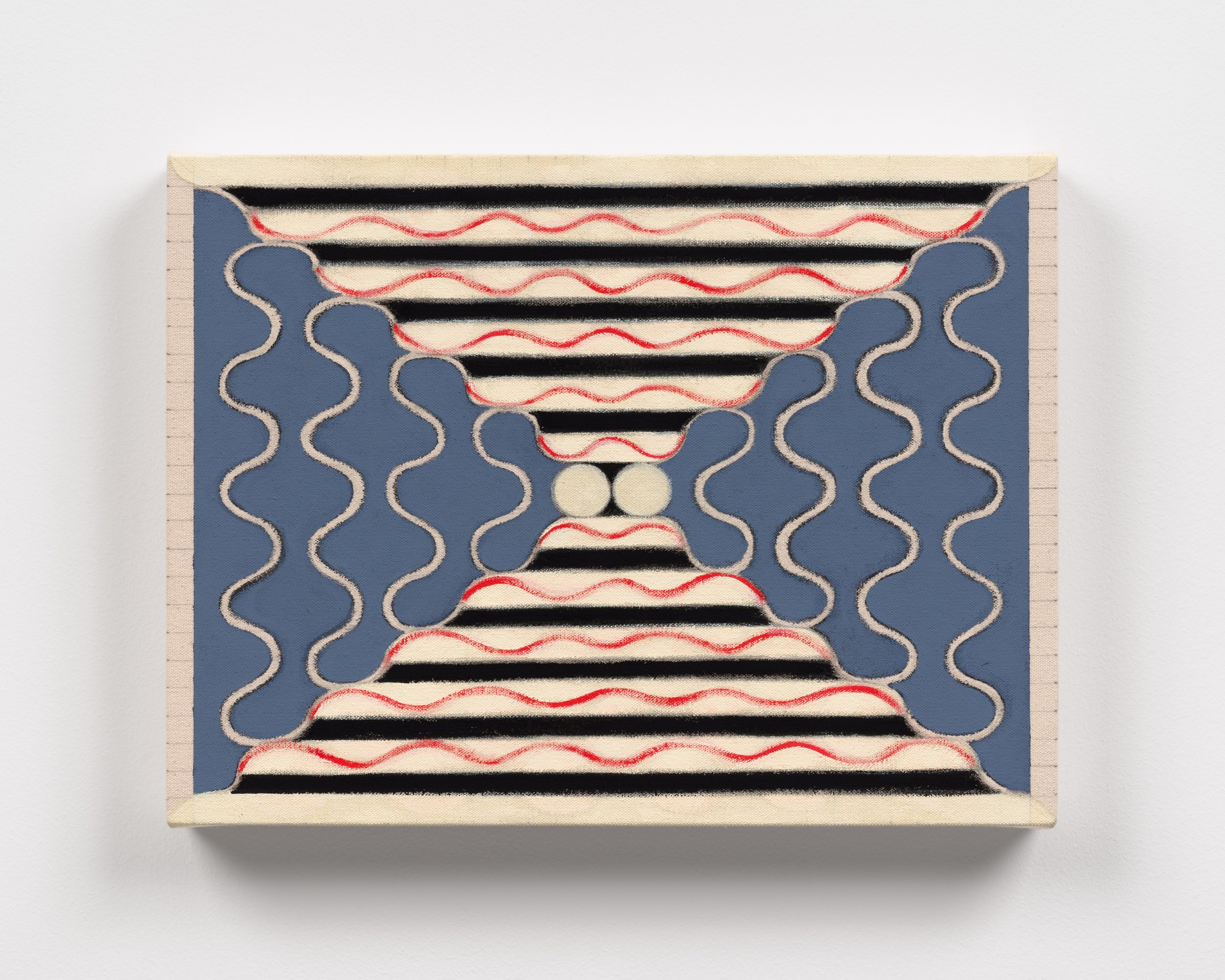
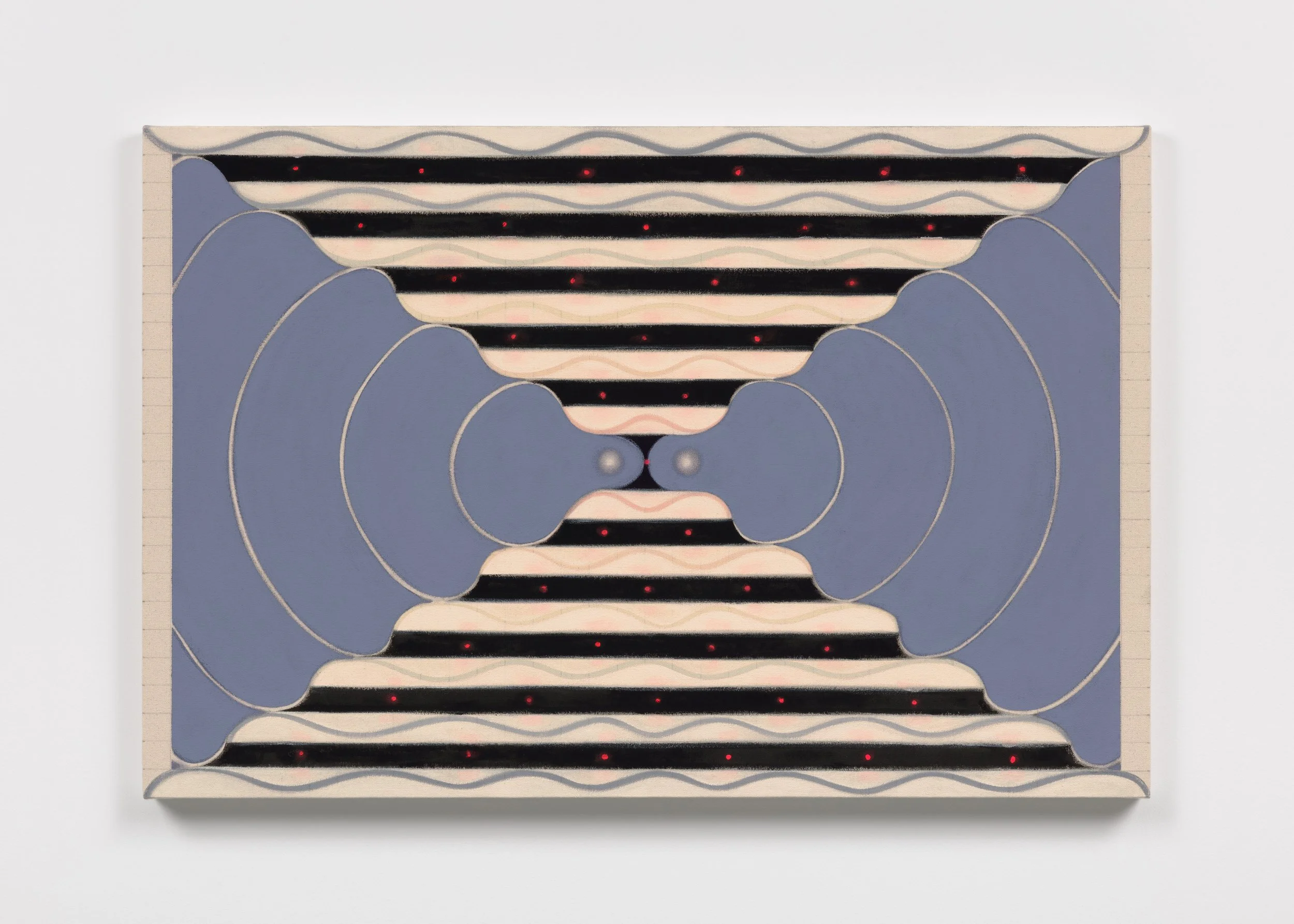
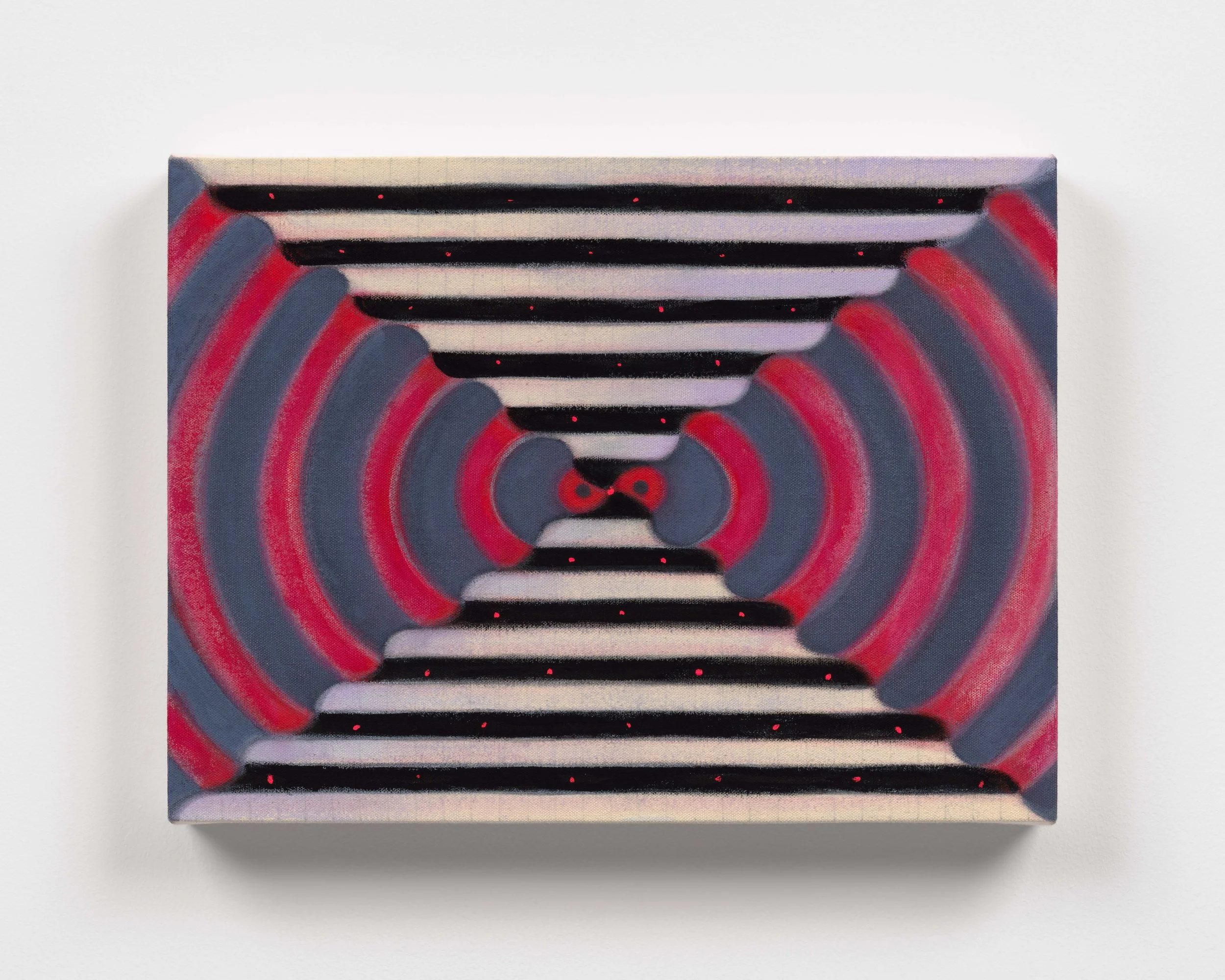

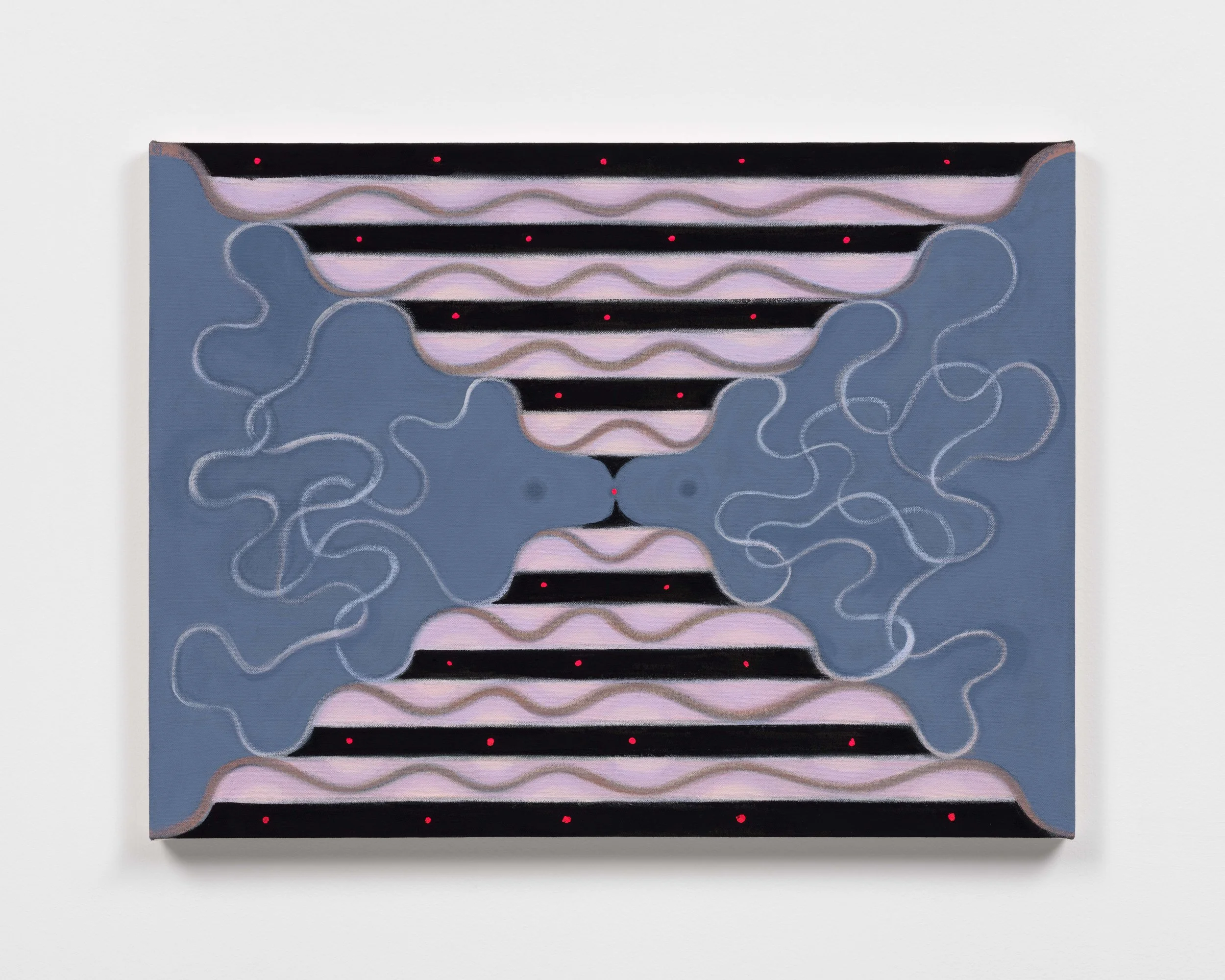
Row 1, from left to right: Attention, 2023; Grace, 2024; Dream, 2025; Quicksand, 2025
Row 2, from left to right: Abyss, 2024; Arroyo, 2024; Wake, 2024; Nightingale, 2025
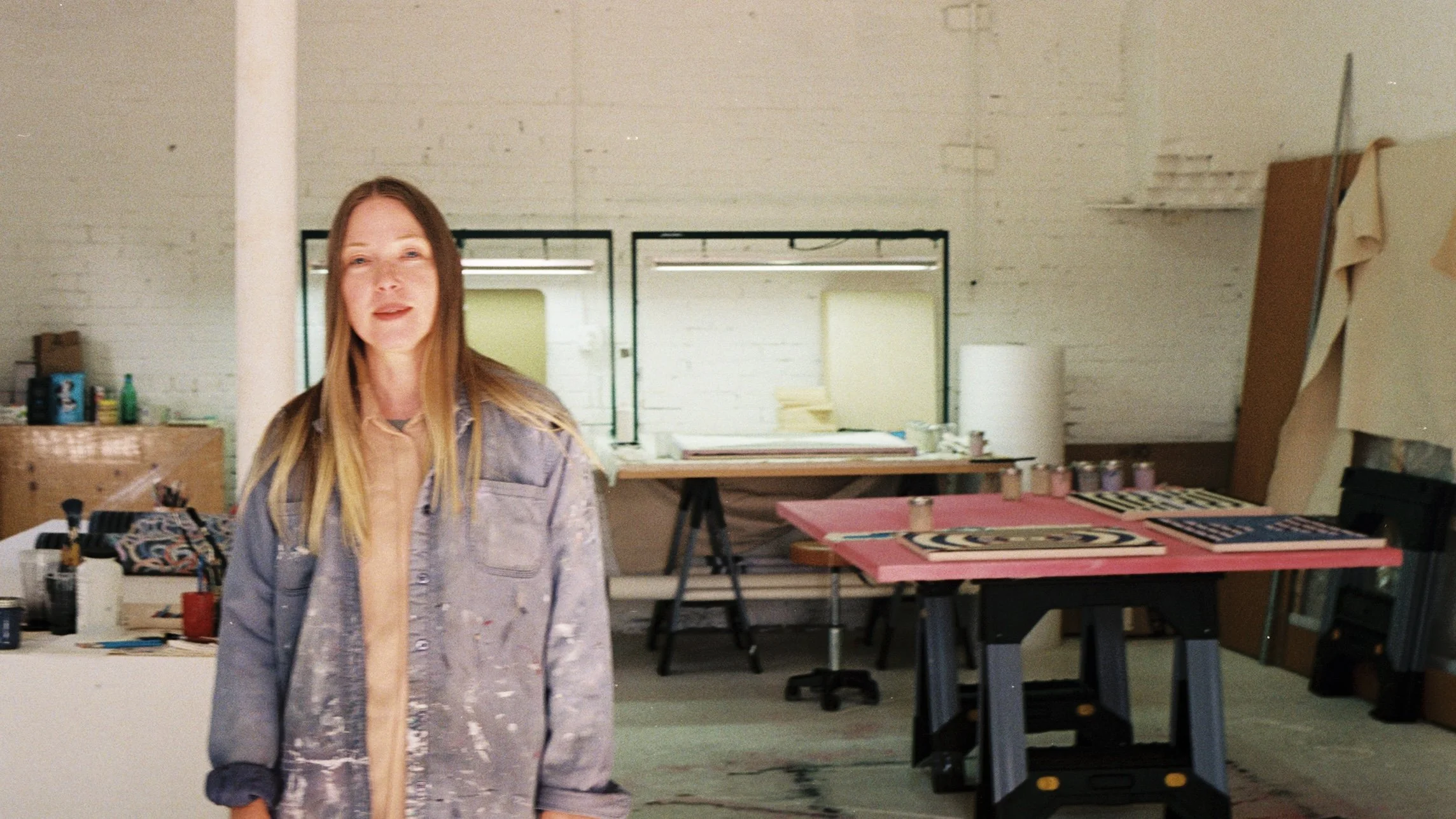
Paola Oxoa (b. 1979, Medellín, Colombia)
Paola Oxoa is an American artist whose work centers on a singular visual form developed privately over more than a decade. The form first appeared in 2013, following an experience while traveling in a dugout canoe, where Oxoa registered the dissolution of boundaries between her body and the surrounding environment. The resulting awareness of energetic continuity remains a central premise of her practice.
In 2023, after an extended period of drawing, she began painting with this form. Her process is structured and intentional, attuned to the energy perceived in the environment and body at the time of making. The surface of each painting records these conditions, indexing shifts in presence through the application of paint.
Oxoa’s work engages the legacy of postwar abstraction and systems-based practices. The form operates less as motif than as vessel—an architecture through which perceptual, energetic, and temporal states may be transmitted. Her practice is shaped by broader inquiries into structure, language, and non-verbal modes of communication.
She lives and works in Beacon, NY.
